This is a concept piece. Format Studio is a fictional strength and conditioning studio we use to show what a content system looks like when it is designed around the owner’s actual week. Every template, screen and document below was made for this piece as a working file. The studio, its coach and its members are invented, the photographs are generated, and none of it has been run for a paying client. If you run a studio, a clinic, or any business whose owner is also the talent, we scope and build your version. See what the social work includes.
A content system for a fictional strength and conditioning studio, built around the constraint that decides whether any small business posts consistently: the person who has to make the content is the same person coaching the 6am, the 12pm, and the 6pm.
Every content strategy that ignores that constraint fails in about five weeks. The studio posts daily for a fortnight, misses a day, misses a week, and the account goes quiet until the next slow month. The problem is never discipline. It is that every single post starts from a blank page, and a blank page after a nine-hour day on the gym floor loses to going home every time.
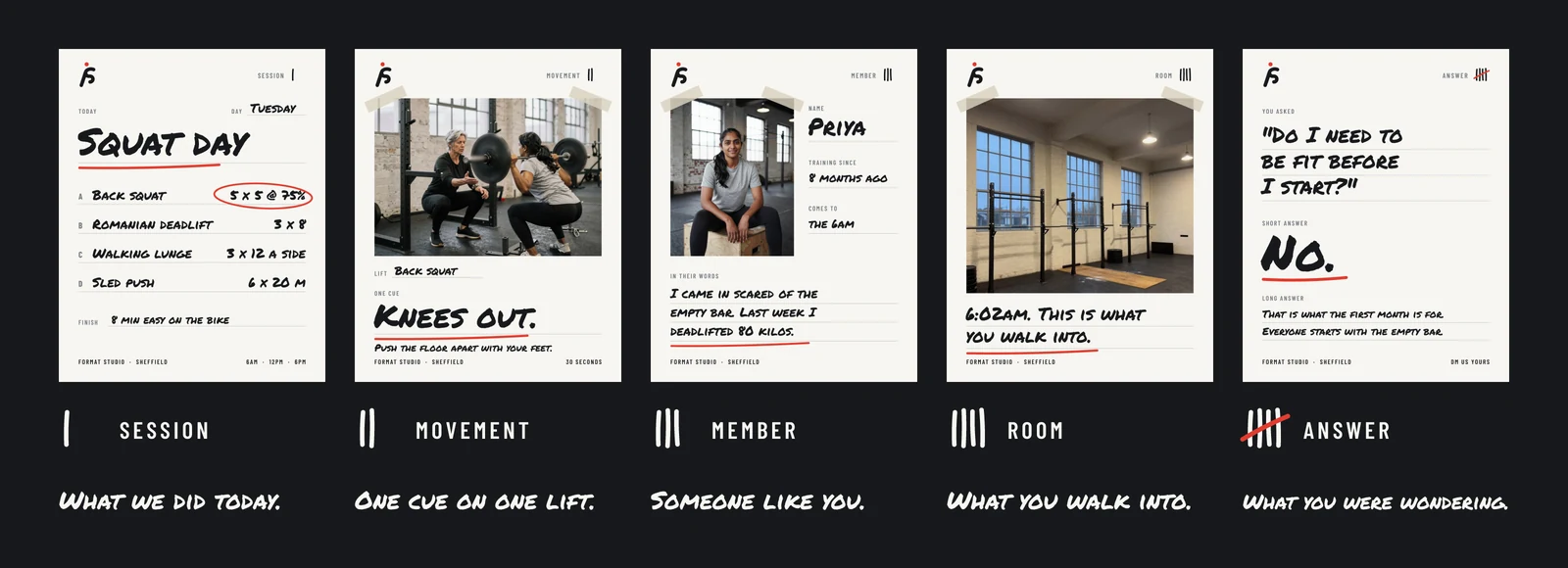
So nothing here is a posting schedule. It is a set of five things the studio already does, turned into five things it can post, with the design decided in advance so the only work left is the part only the coach can do.
Why this shape
A strength studio’s audience splits into three groups who want completely different things, and most gym accounts post as if there is only one:
- Members, who want to see themselves and their sessions, and who stay because the place feels like theirs
- The nearly-converted, who have walked past twice and want to know what actually happens inside before they have to speak to anyone
- Everyone else, who will never join, and whose attention is worth nothing to a business with a catchment of about two miles
Most studio accounts optimise for the third group, because that is where the view counts are. A form-check clip on a barbell movement will travel much further than a photo of the 6am regulars, and travel is the wrong metric for a business that can only serve people who can physically get there. The system is built for the first two groups and treats reach as a side effect.
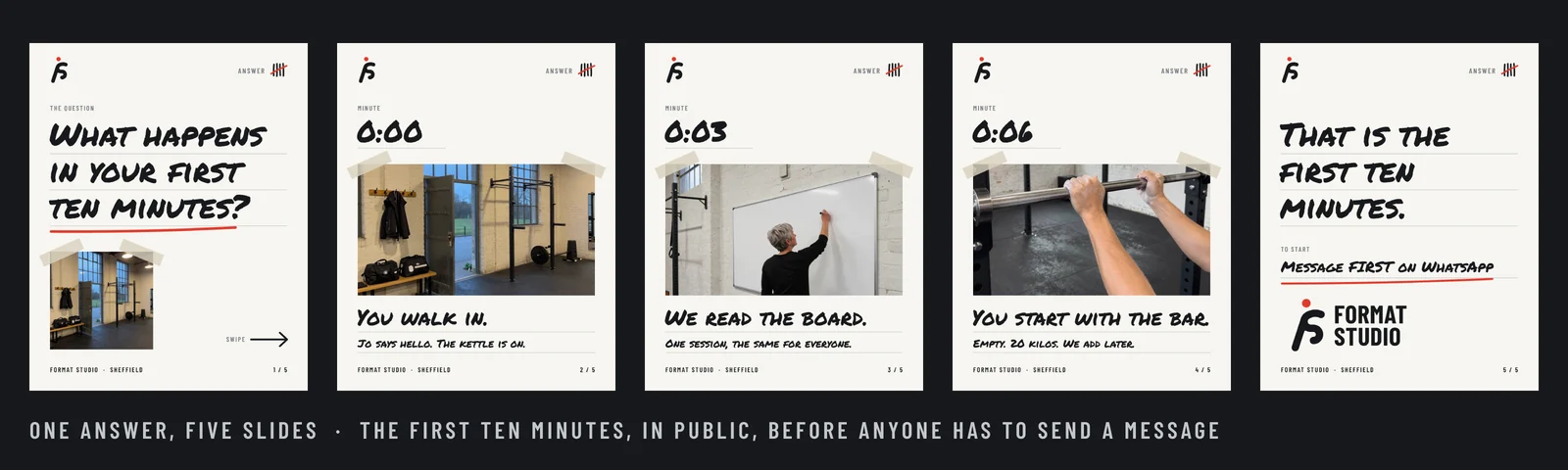
The second constraint is the nearly-converted one. The single biggest thing stopping someone joining a strength gym is not price and not time. It is not knowing what happens in the first ten minutes, and not wanting to be the least capable person in the room. Nearly every piece in the system exists to answer that, in public, before anyone has to send a DM.
One brand, briefly
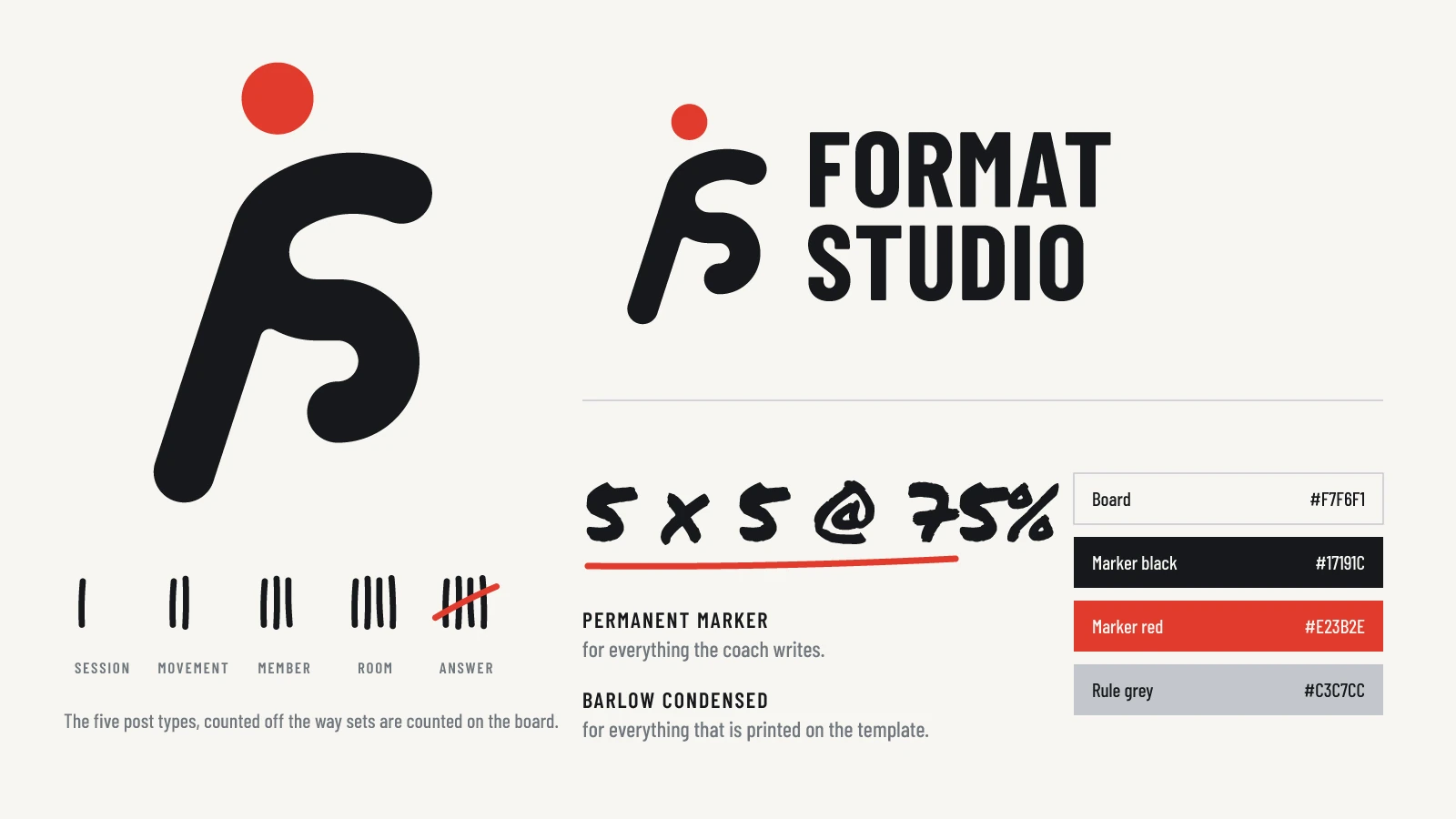
This is a social piece, so the brand is only as big as the templates need. The whole look comes off the studio’s own whiteboard: marker black, one red pen, and a condensed face for anything printed. The logo is an F that is also a person: a round red head, a leaning body, and one heavy line that runs from the hand over the shoulder and round to a raised foot, which makes the S. The five post types are counted off the way sets are counted on the board, one stroke up to five.
The five post types
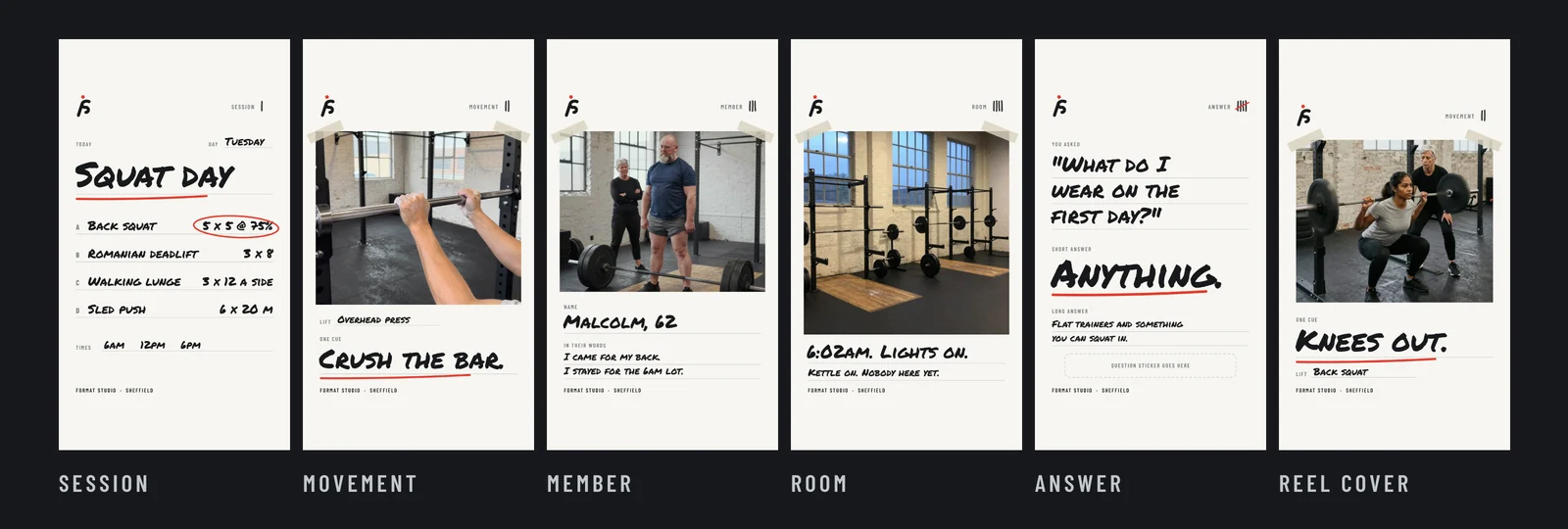
Everything the studio posts is one of five things, and each one has a template, so the decision “what do I post” is replaced by “which of the five, and about what”.
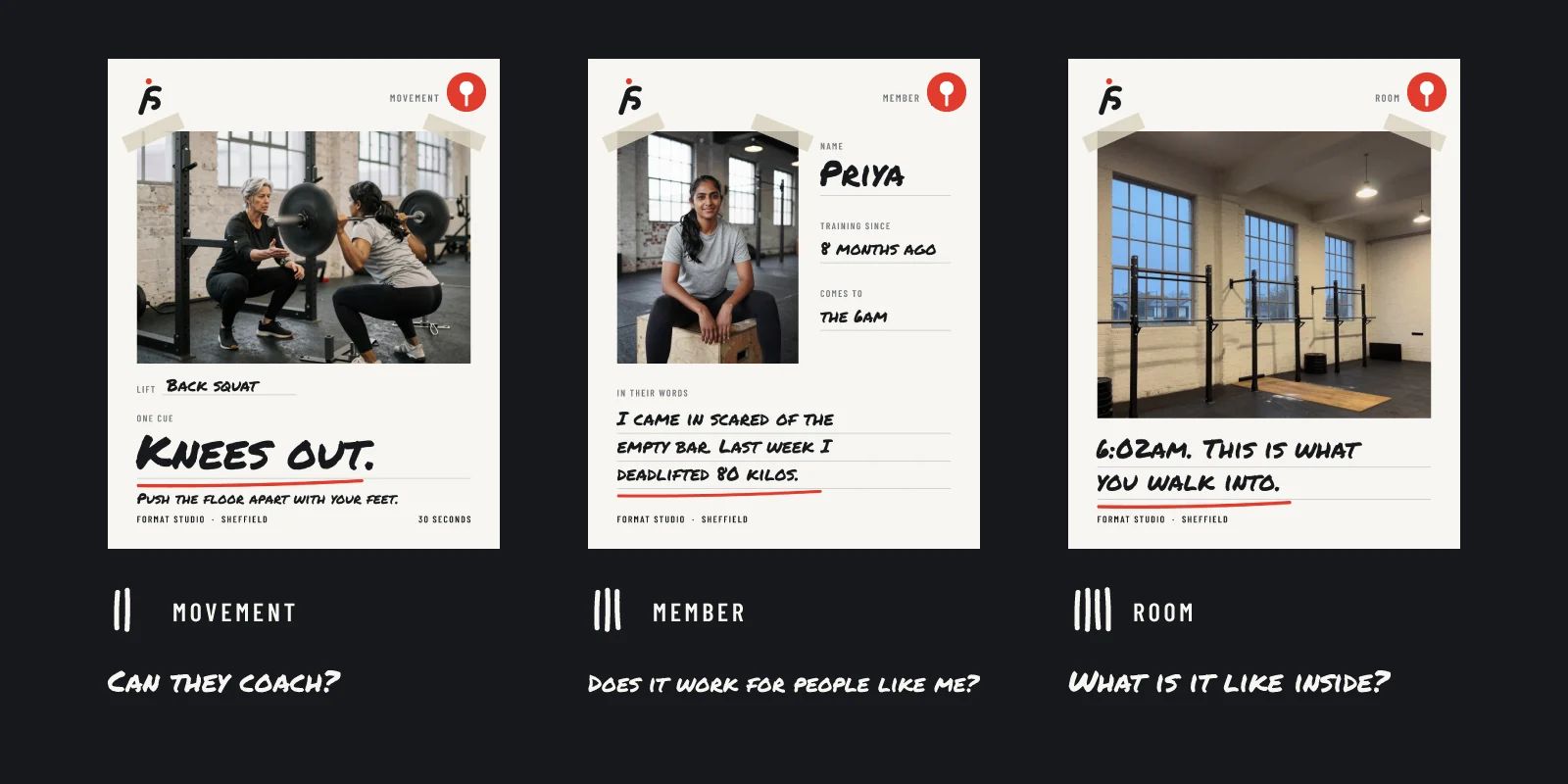
- The session. What was actually programmed today, written the way it goes on the whiteboard. It is the cheapest possible post and the one members look for.
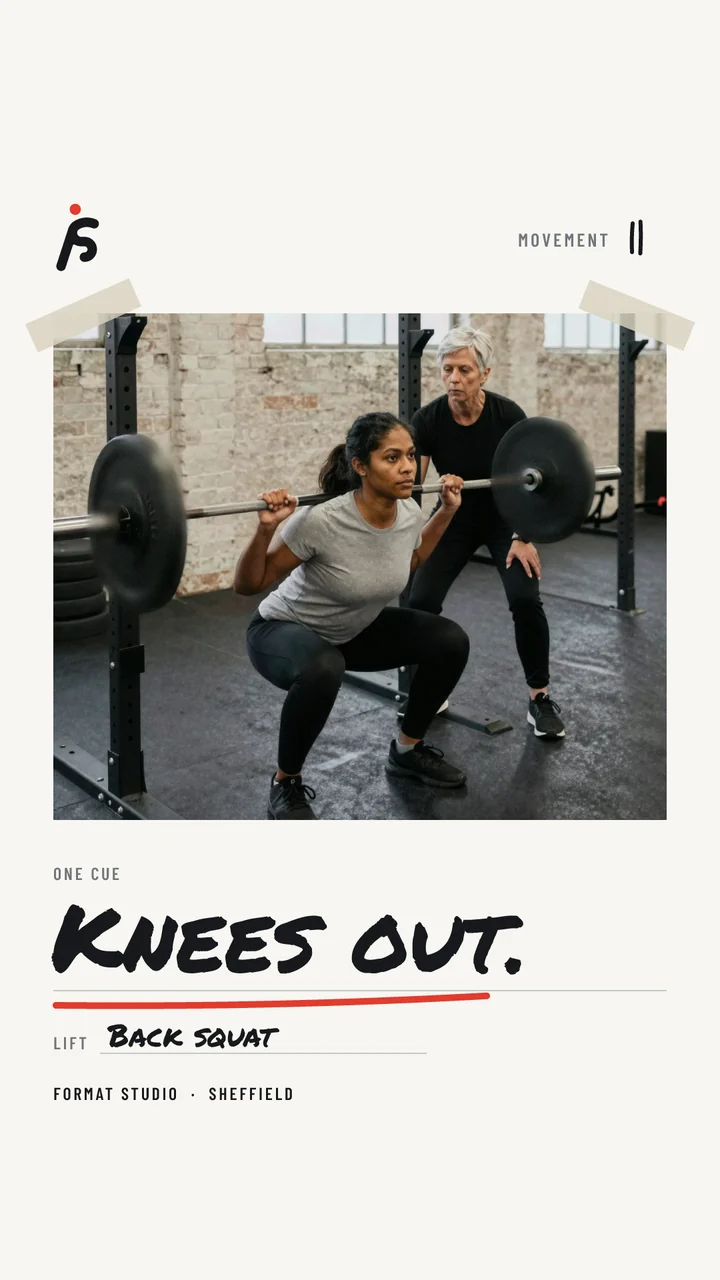
- The movement. One coaching cue on one lift, shot in thirty seconds between sessions. This is the piece that travels, and it is the proof of competence for anyone deciding whether the coaching is real.
- The member. A person who has been coming for eight months, named, with what changed for them, in their words, in their own sentences, not a testimonial graphic.
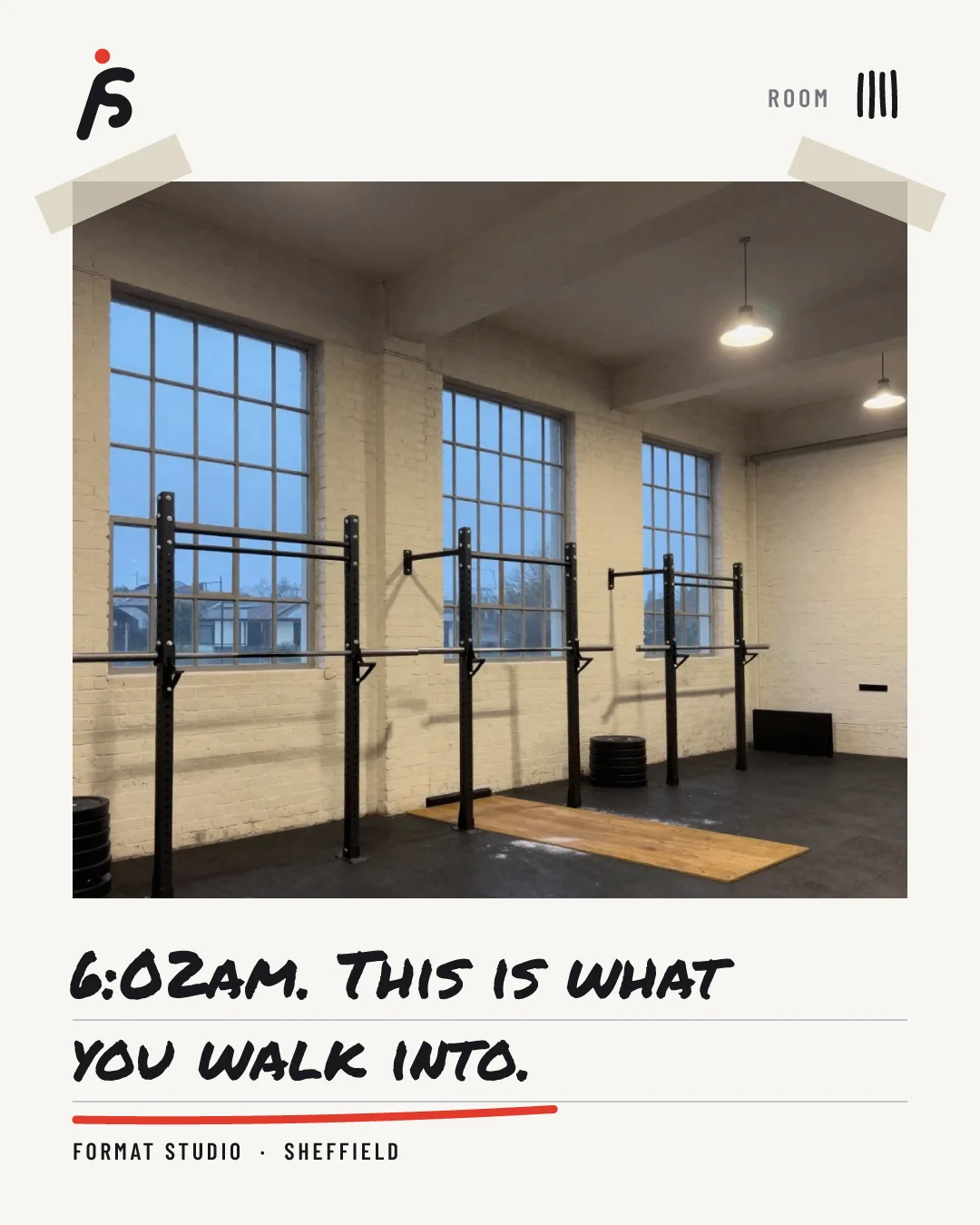
- The room. The gym at 6am with the lights on and nobody performing. This is the one that answers “what happens in the first ten minutes”, and it is the post almost no studio makes.
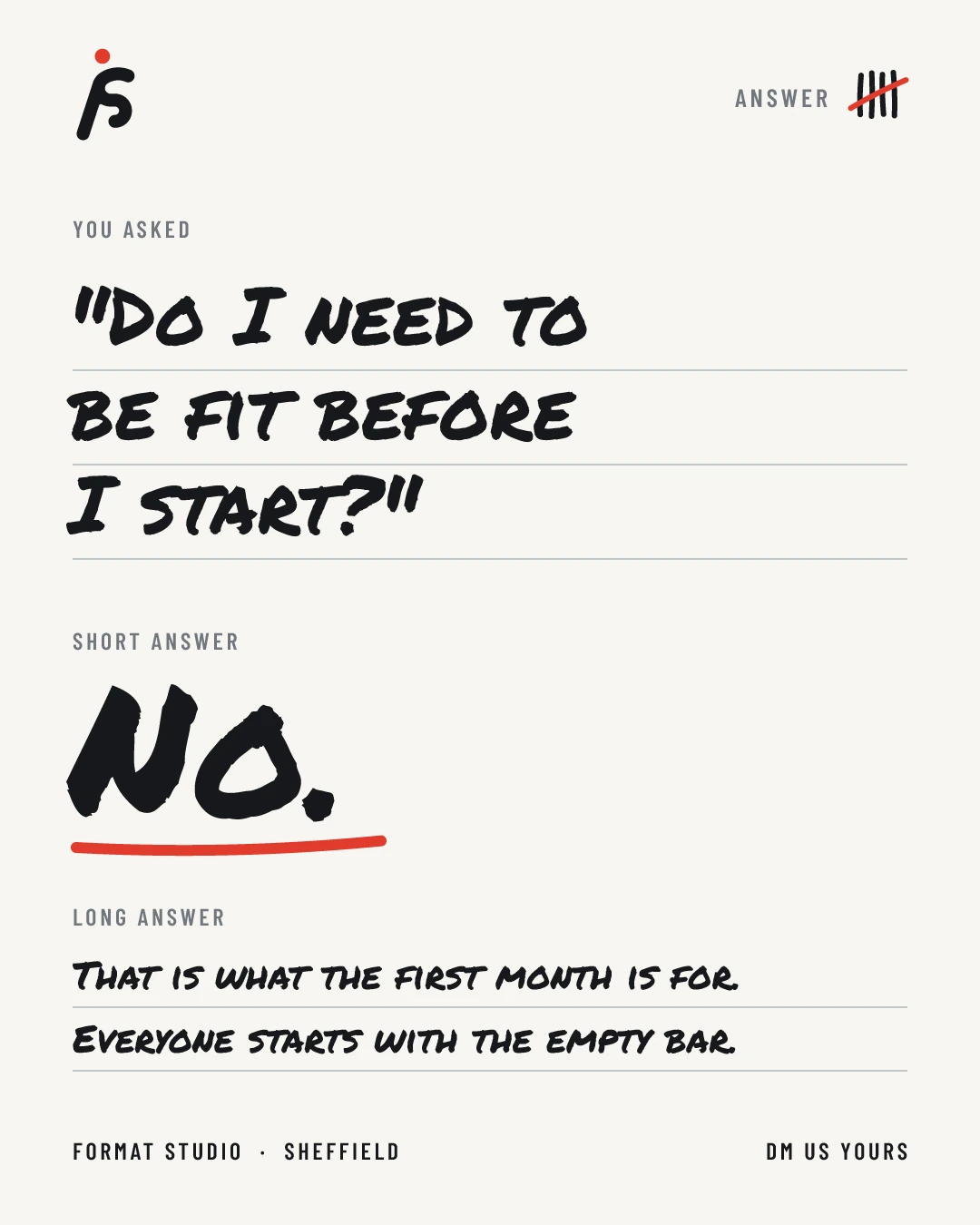
- The answer. One real question from the DMs, answered in full, publicly. The question is always more useful than the answer, because it shows the next person they were not the only one wondering.
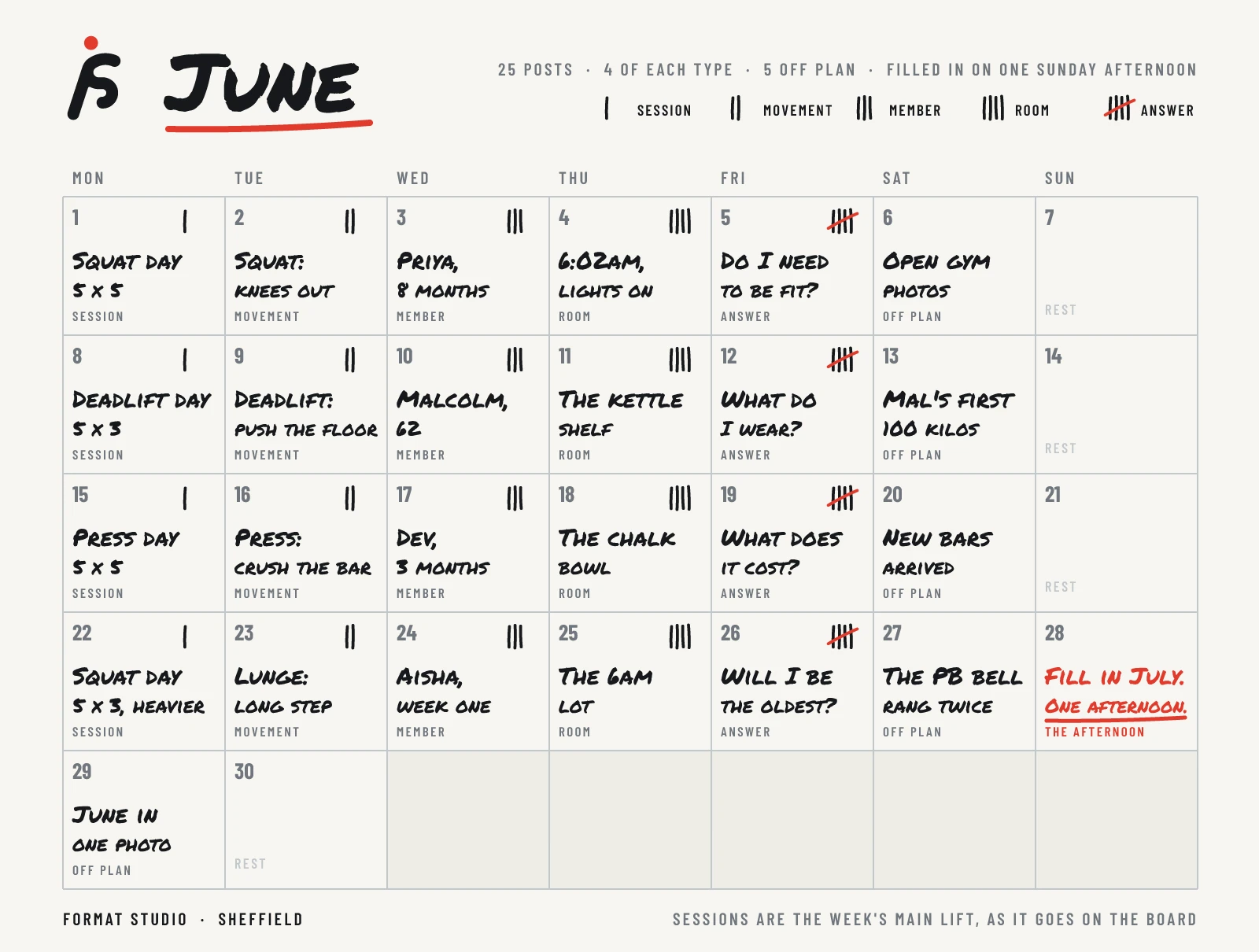
A month is four of each, plus a few off-plan. That is a fortnight of shooting spread across a normal working week, and an afternoon of assembling.
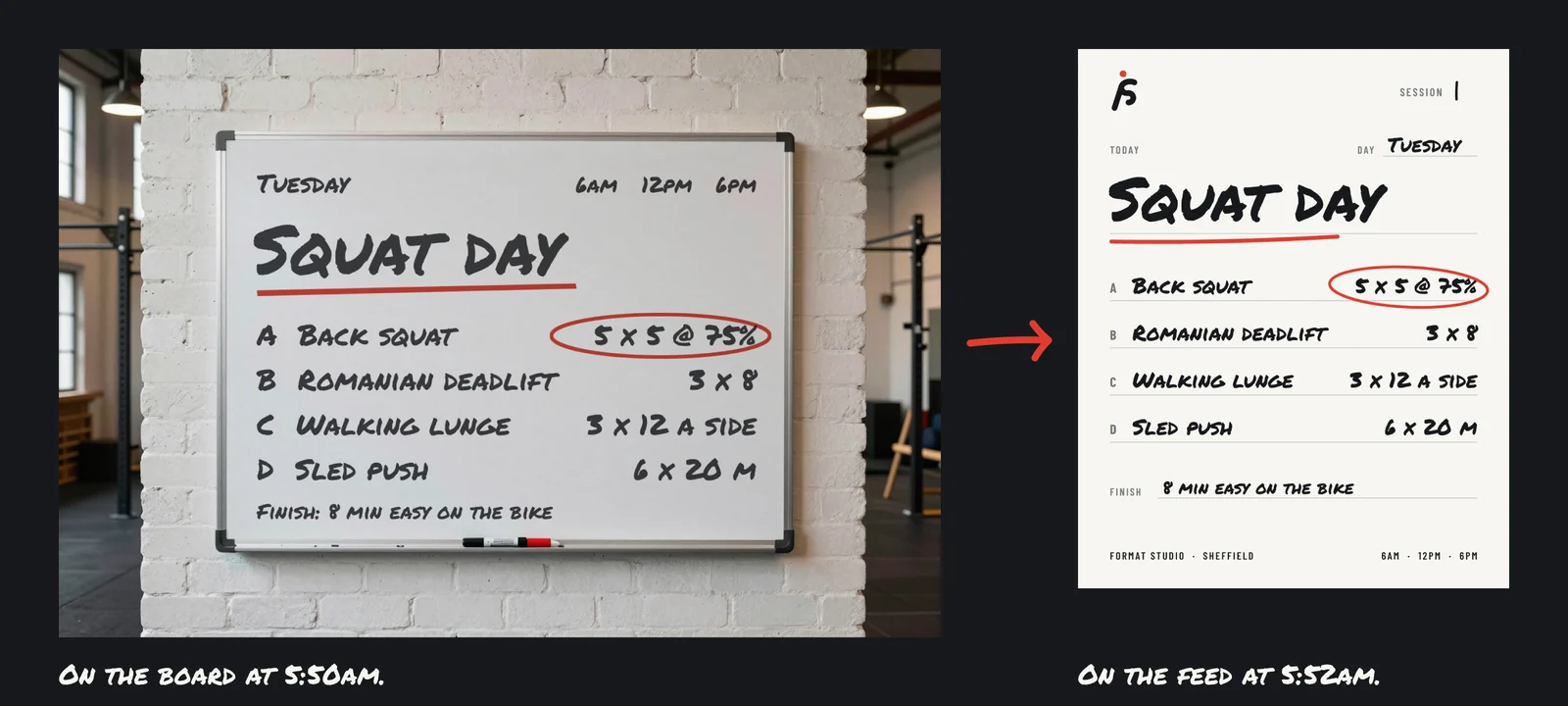
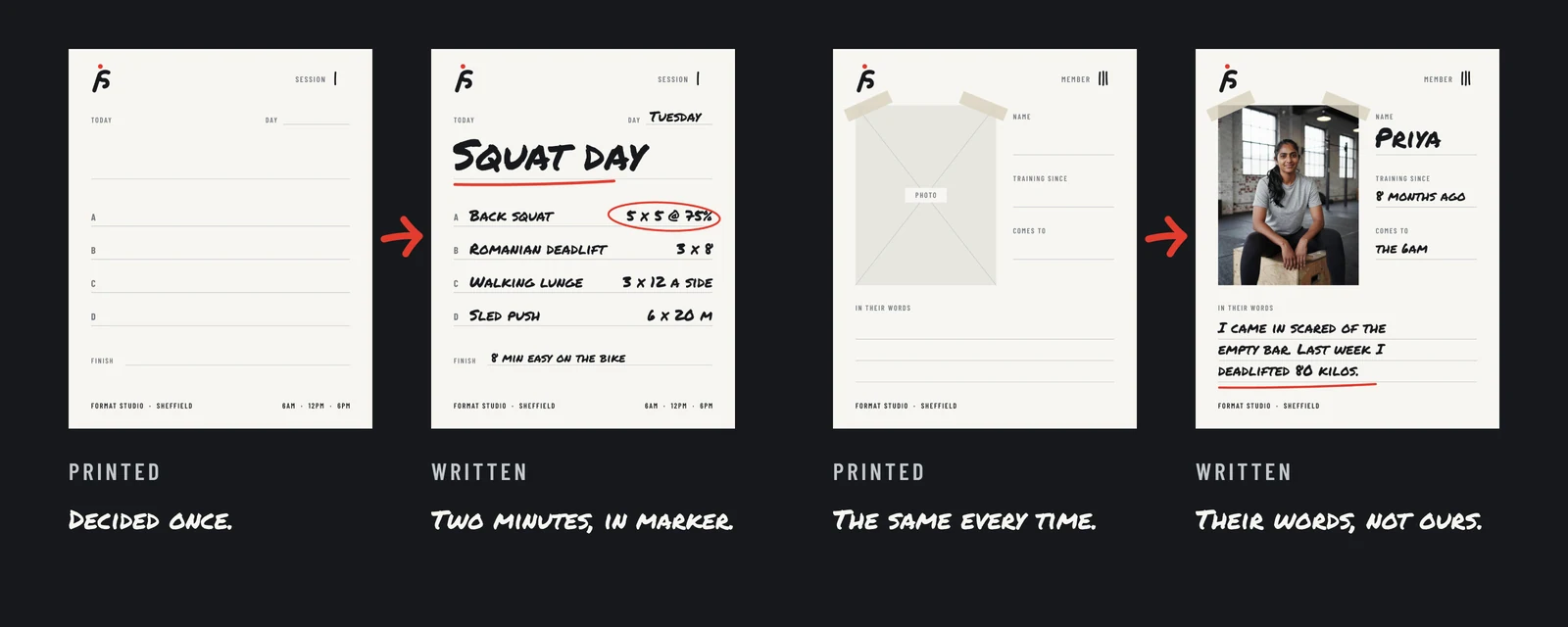
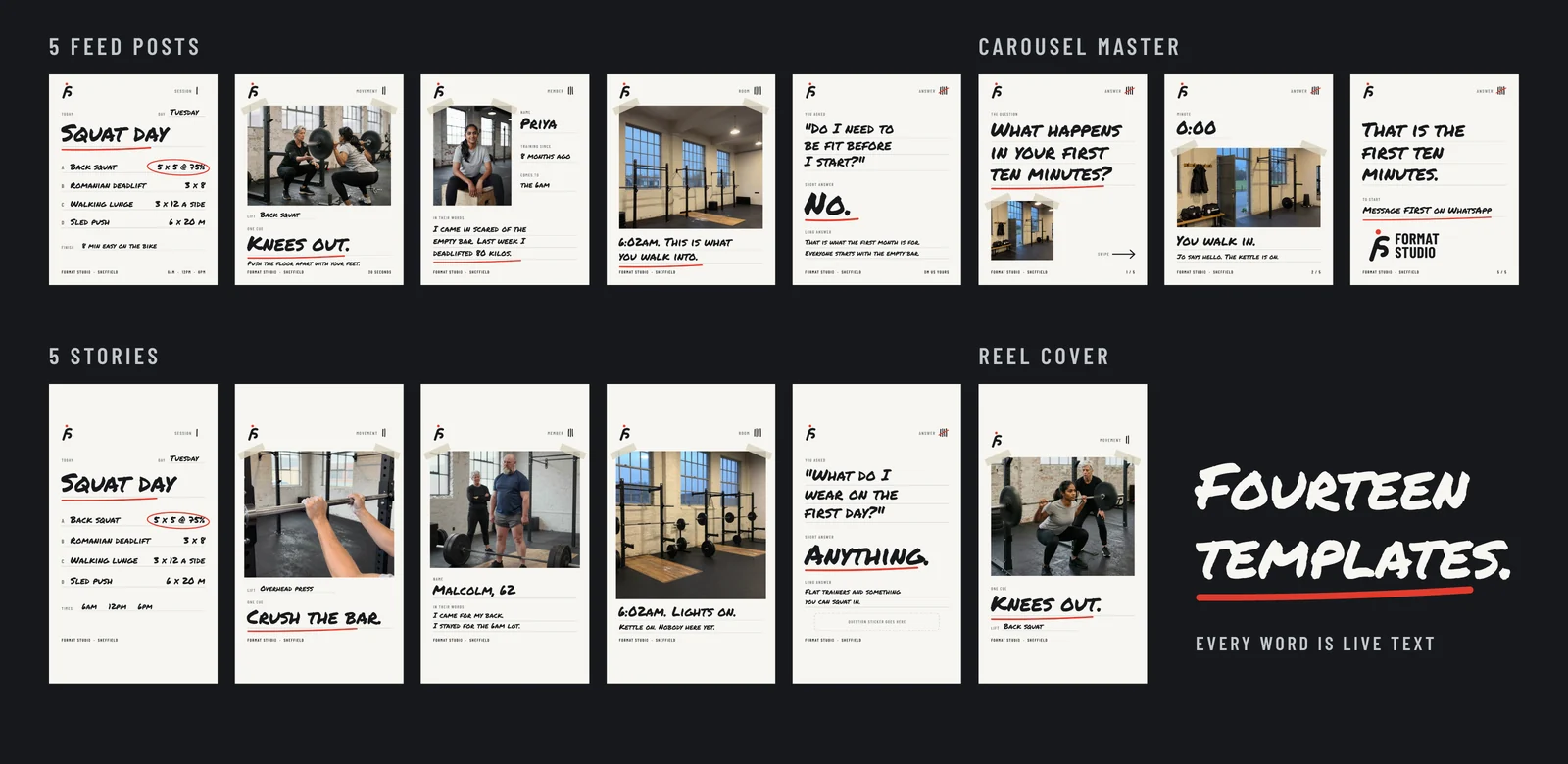
Every template is two layers. What is printed was decided once: the labels, the rules, where the photograph goes. What is written is the only part the coach touches, so a post is filled in the same way the board is.
Two of the templates move. The session story fills itself in the way the board gets written. The movement reel has a place for the coach’s thirty seconds, a panel for the cue, and an end card where the logo draws itself. In the reel below a photograph stands in for the clip.
The profile
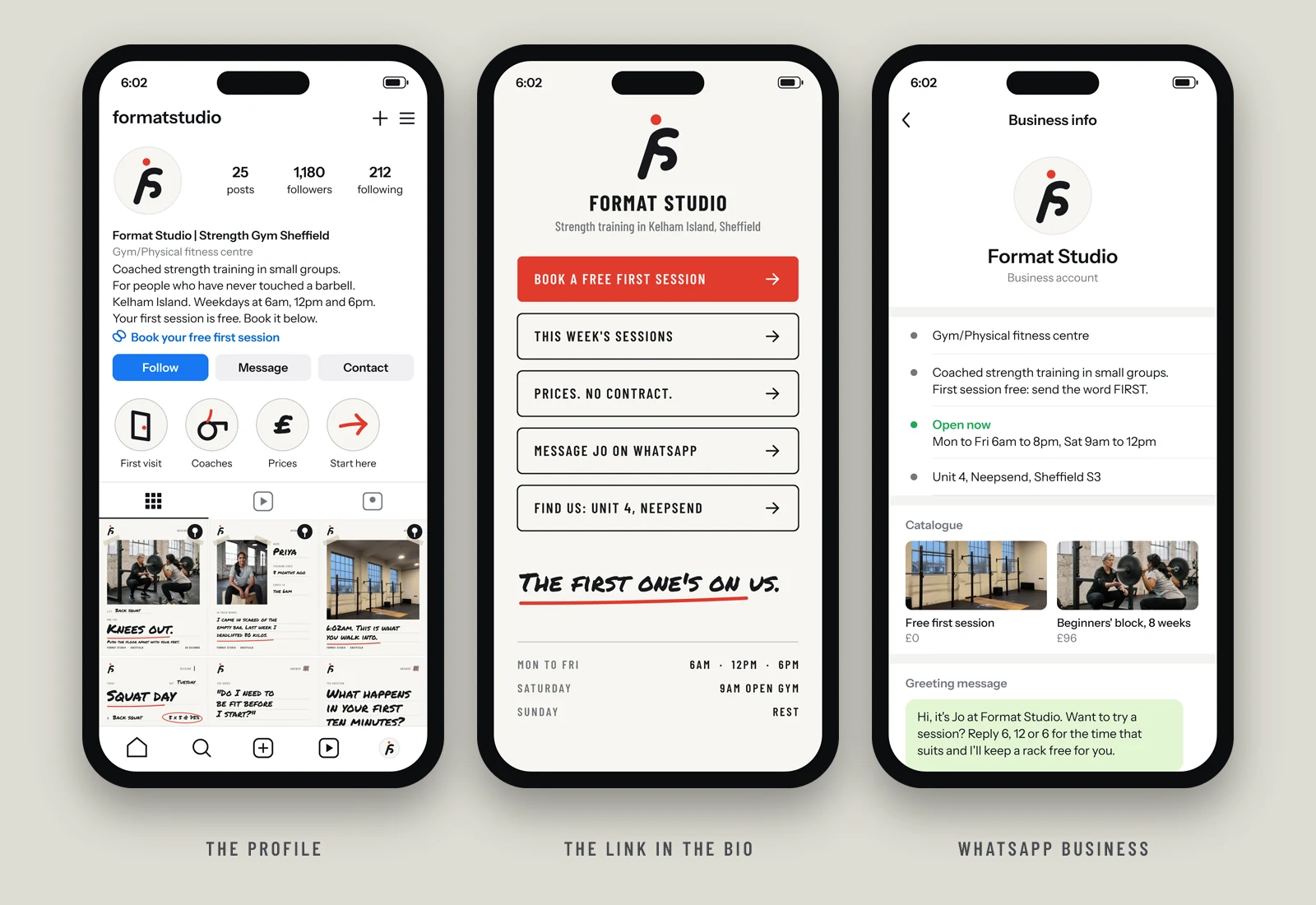
The profile is rebuilt for the person who has never heard of the studio. The name field carries what people type into search, a strength gym in Sheffield, and not only the studio’s name. The bio then answers four things in four lines: what it is, who it is for, where it is, and what to do next.
The tap after the profile goes somewhere that takes a booking. The link opens a page whose first button is a free first session, and the WhatsApp Business profile greets a new message by asking which of the three class times suits.
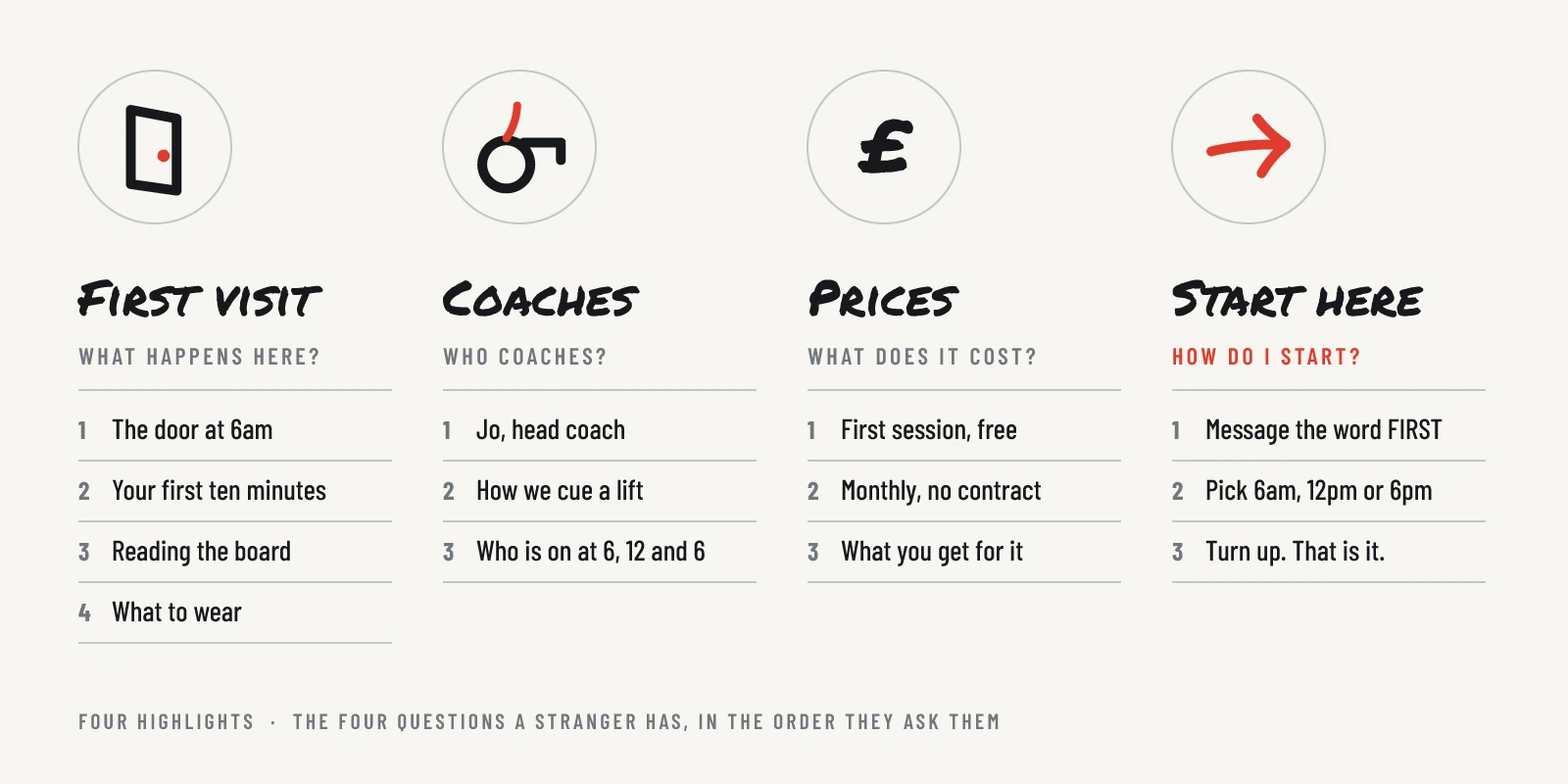
The highlights mirror the four questions a stranger has before they will send a message: what happens here, who coaches, what it costs, and how to start. Each one holds three or four stories that answer its question and nothing else.
The top row of the grid is pinned on purpose: one movement, one member and one room, so it answers competence, proof and atmosphere without a scroll.
The month
The first month is handed over filled in, not as an empty grid. Mondays are the session, Tuesdays the movement, Wednesdays a member, Thursdays the room and Fridays an answer, with Saturdays left for whatever happened that week. The last Sunday is the afternoon the next month gets filled in.
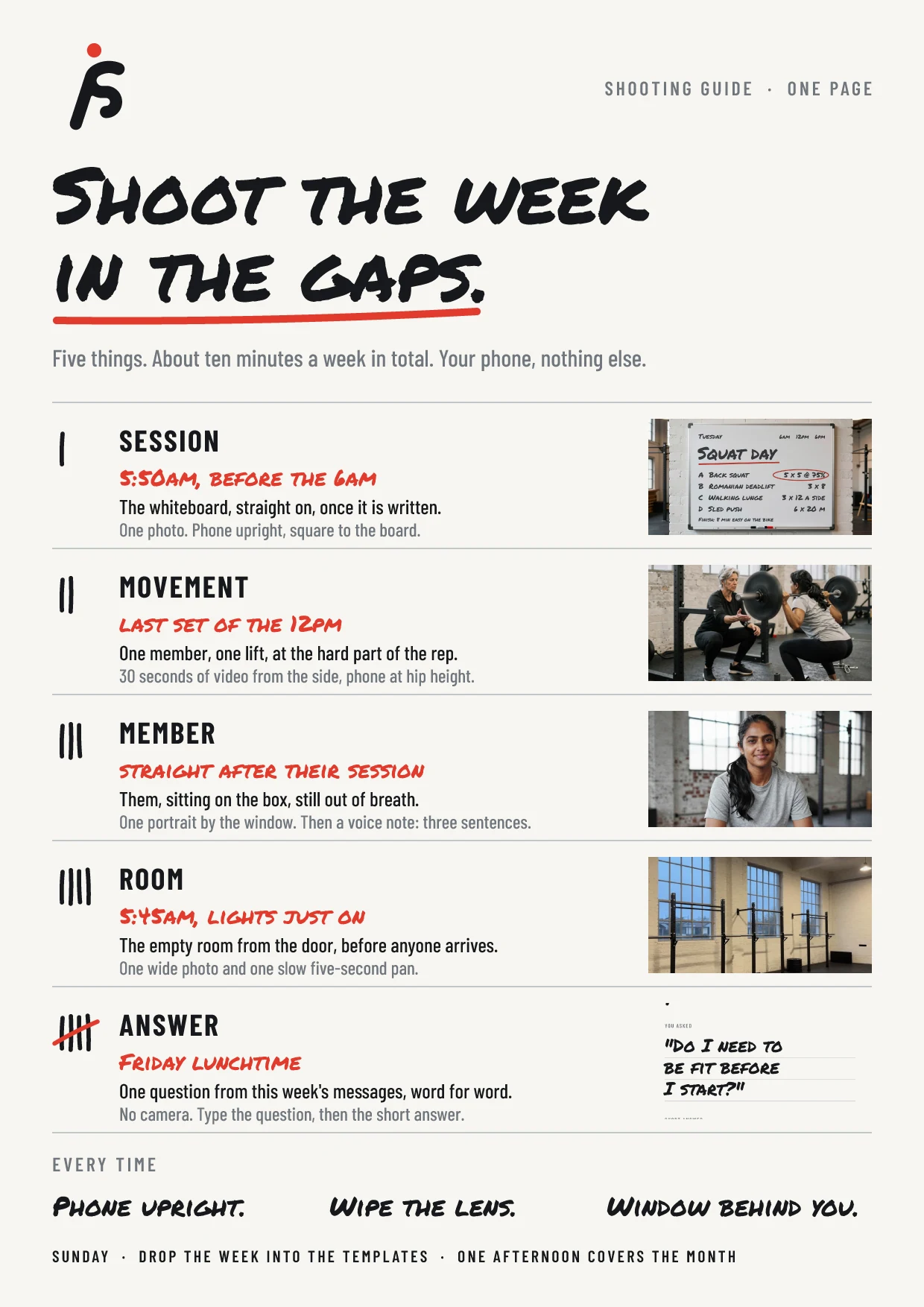
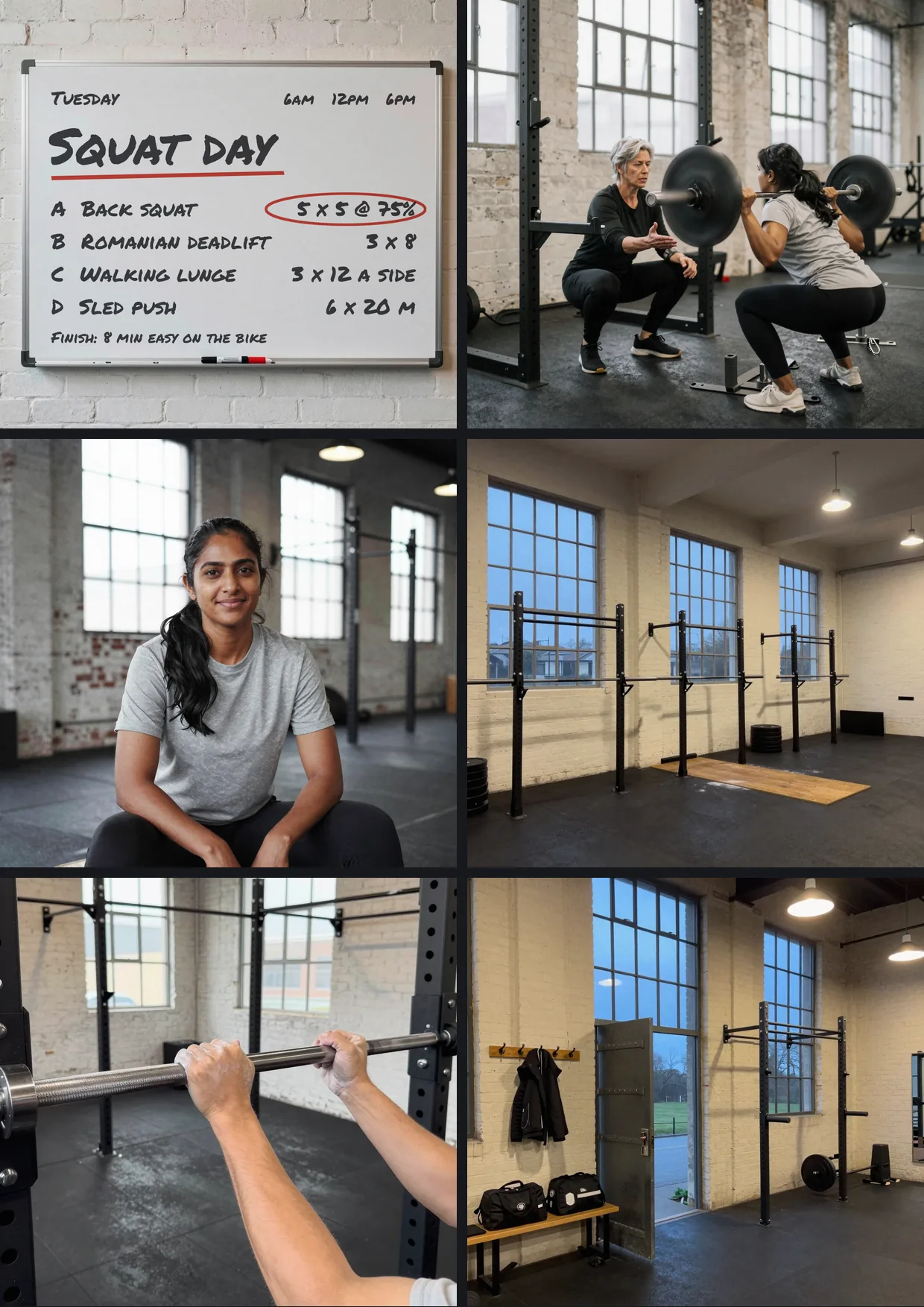
The shooting guide is the page that makes the calendar possible. It says what to capture, when in the day, and how to hold the phone, so a week’s raw material is shot in the gaps between sessions.
What ships
- A rebuilt profile: name field written for what people actually search, a bio that answers what it is, who it is for, where it is, and what to do next, in that order
- Highlight covers and a highlight architecture that mirrors the four questions a stranger has: what happens here, who coaches, what it costs, how to start
- A link-in-bio and WhatsApp Business profile designed so the tap after the profile goes somewhere that takes a booking, not to a homepage
- Fourteen editable templates across the five post types: five feed posts, a three-slide carousel master sized for Instagram and for a LinkedIn document, five stories and a reel cover, on the studio’s type and colour
- Two motion templates: the animated session story and the movement reel with its end card
- A pinned three chosen deliberately: one movement, one member, one room, so the top of the grid answers competence, proof, and atmosphere without a scroll
- A thirty-day calendar filled in with a month of programming written for the studio, so the first month is not a blank template kit handed over with good luck
- A one-page shooting guide: what to capture, when in the day, and on what, so the coach can shoot a week’s raw material in the gaps between sessions
The templates here are drawn in Illustrator with every word as live text, and the motion is built in After Effects. For a client the kit is then rebuilt in Canva, or whatever the owner already uses, so it can be filled in on a phone. That last step is not part of this concept.
Why this matters
The deliverable that matters here is not the templates. It is that the studio stops making a decision. Five post types, fourteen templates, and a filled calendar turn a daily creative problem into a weekly production task, and a production task survives a bad week in a way that inspiration does not.
The same structure transfers to any business where the owner is also the expertise and the time: a dental practice, a physio, a barber, a driving instructor, a small law firm. The five types change. The constraint, that content has to be makeable by a tired person in the gaps of a working day, never does.