This is a concept piece. Ravel Interiors is a fictional Lagos interior design studio we use to show what creative production looks like when it is built as a system rather than bought as a one-off animation. Every asset is real and buildable as specified; it has not been produced for a paying client. If your work is visual and your output is currently one photograph at the end of it, we scope and build your version. See what the creative work includes.
A creative production system for a fictional Lagos interior design studio, built around the thing that quietly wastes most of the value in visual work: a six-week project produces one finished photograph.
An interior studio spends six weeks on a room. At the end there is a shoot, and the shoot produces a set of stills of a finished space with nobody in it. Those stills are beautiful, they are the last thing that happens, and they are almost useless at winning the next project, because a client choosing an interior designer is not buying a finished room. They are buying the six weeks, and the six weeks were never filmed.
So the system starts at the beginning of the project instead of the end, and it treats the build itself as the footage.
Why this shape
Interior design sells on two things that a finished photograph cannot show:
- Judgement. Why that tile, why that depth of green, why the shelf stops where it does. The decision is the product. The photograph is the receipt.
- Competence under mess. A prospective client’s real fear is six weeks of dust, a builder who stops answering, and a room that ends up nothing like the render. The only convincing answer is footage of a site that looks controlled.
Both live in the middle of the project, which is the part nobody records because it is dirty and unfinished and does not look like a portfolio. That is exactly why it works: everyone else’s feed is finished rooms, so a studio showing the middle is the only one making an argument.
The second half of the problem is the motion. A studio whose work is entirely visual will post fifty pieces of video a year, and the difference between those reading as a brand and reading as a phone camera is about three seconds of consistent motion at the front and a consistent set of type and transition rules throughout. That is not a vanity piece. It is the cheapest premium signal available, and it is bought once and used on everything.
The mark
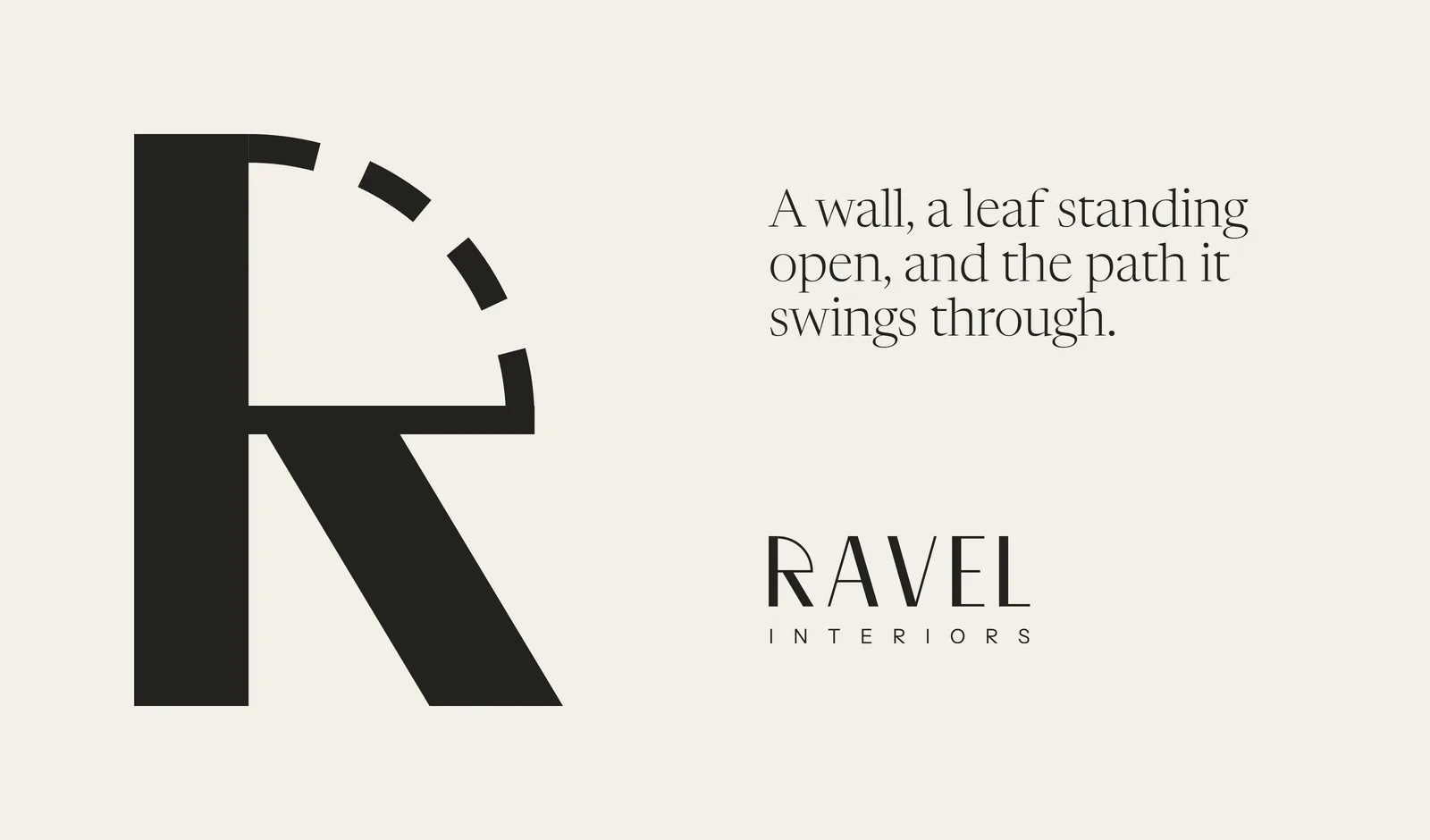
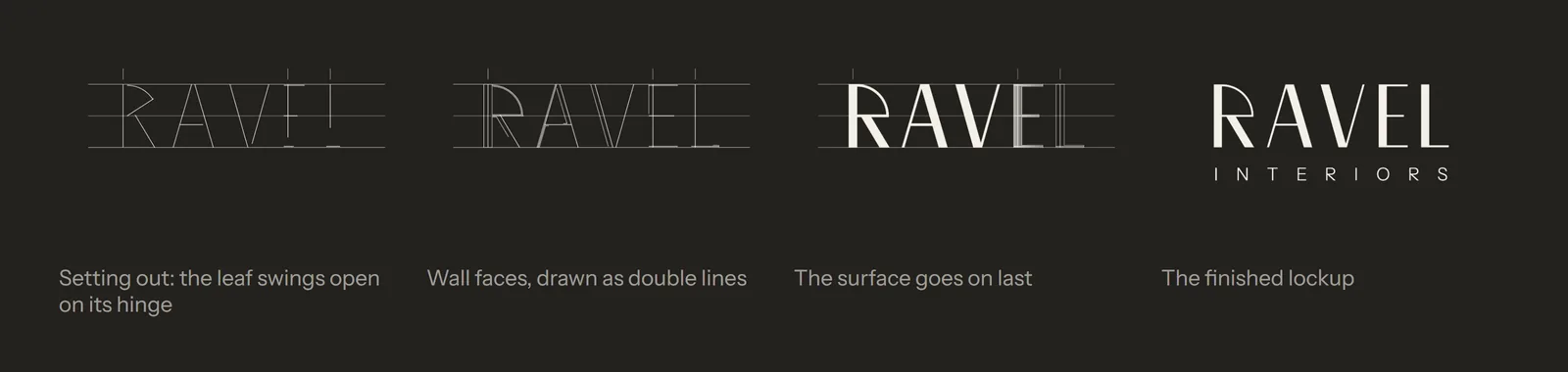
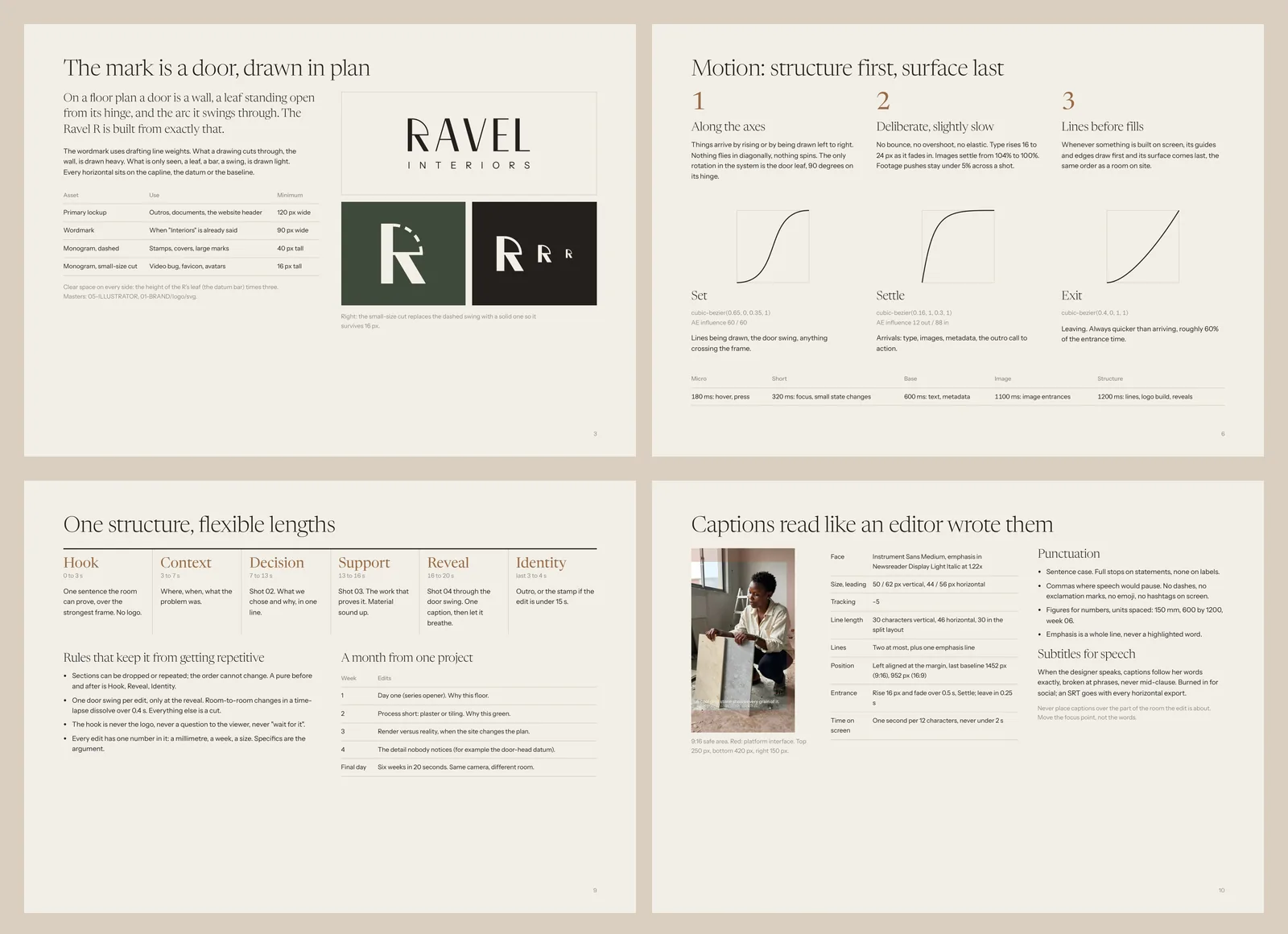
The R is a door, drawn the way an architect draws one on a floor plan: a wall, a leaf standing open from its hinge, and the path it swings through, drawn dashed. The wordmark follows drafting line weights, heavy where a drawing cuts through a wall and light where it only shows an edge. So the logo already describes the studio’s method before it moves.
The three pieces
- Motion identity. The mark, animated: a three-second build and a shorter one-second stamp for clips too short to carry the full version, plus an outro card with the studio’s contact. The animation is derived from the mark’s own construction rather than applied to it: the logo resolves the way a room does, structure first and surface last, which is both the studio’s method and the only defensible reason for the motion to move that way. Delivered as MP4 and transparent MOV so it drops onto any edit, including ones the studio cuts itself.
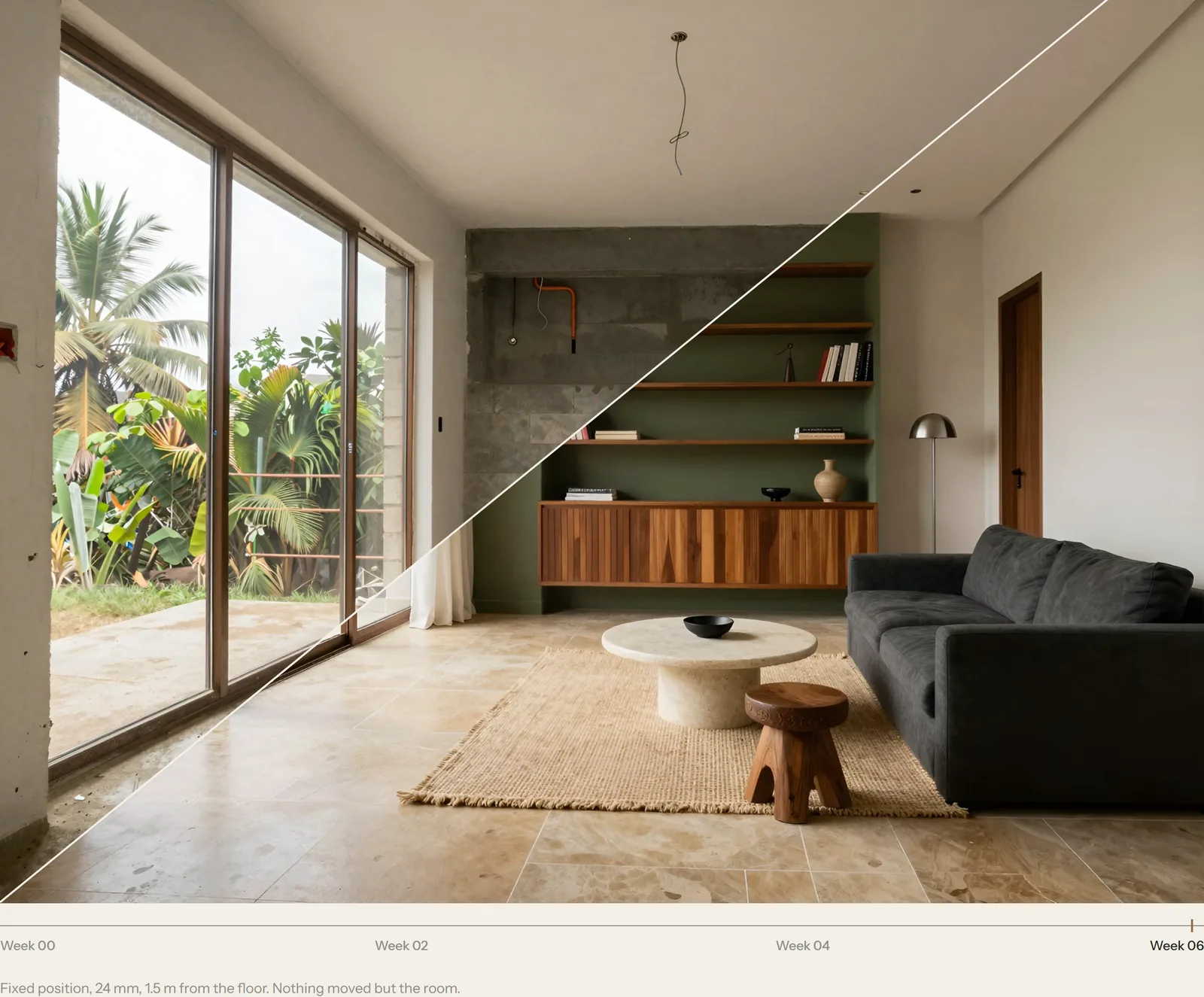
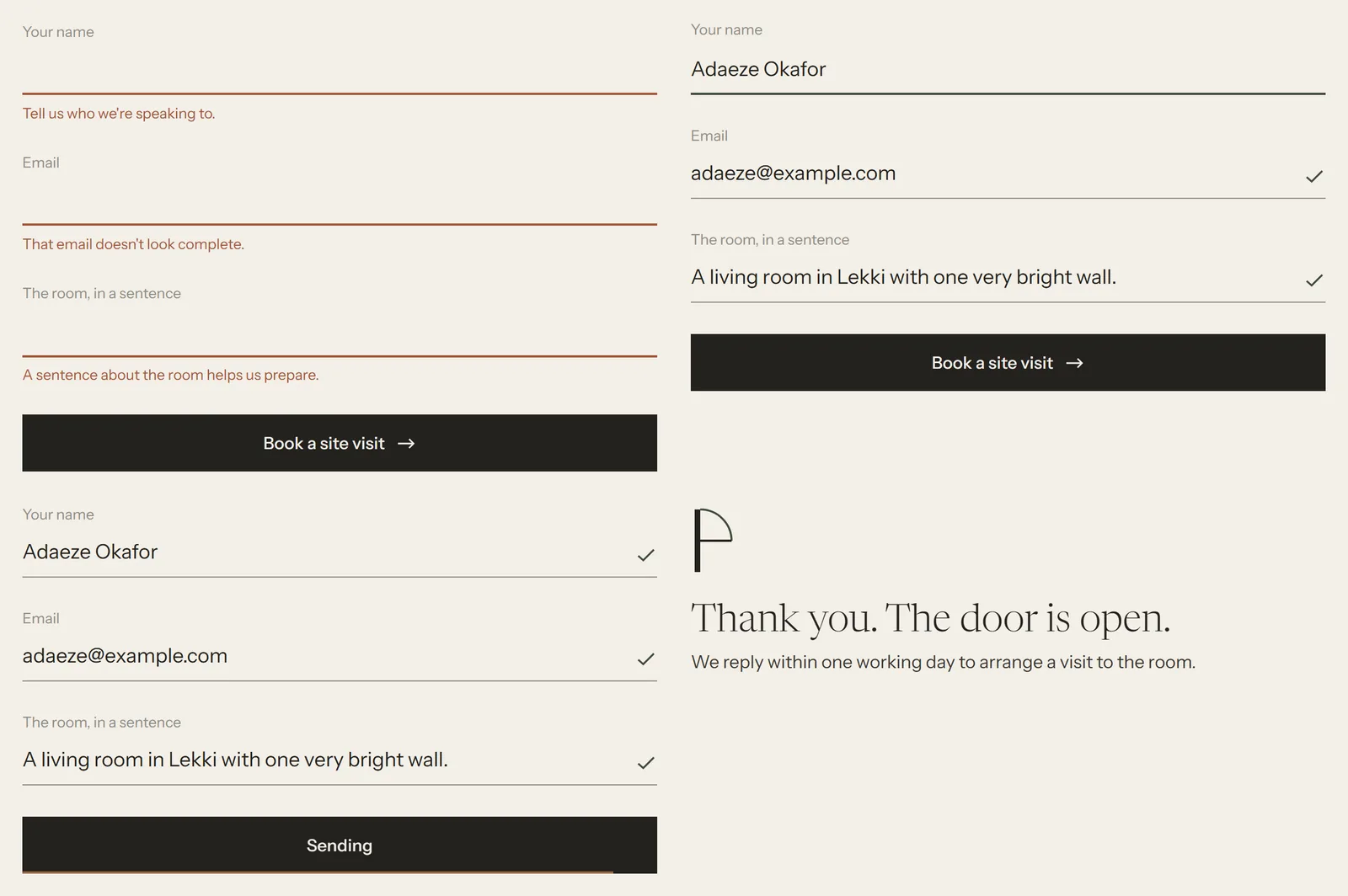
- A UI motion pack for the project site. Entrance and scroll behaviour for the project pages, hover and form states, and a reveal built specifically for before-and-after pairs: the one interaction an interior portfolio genuinely needs and almost always implements as two images side by side. Shipped as reusable Framer Motion components and Lottie files, so the site keeps the behaviour when it is rebuilt and the studio is not paying for it twice.
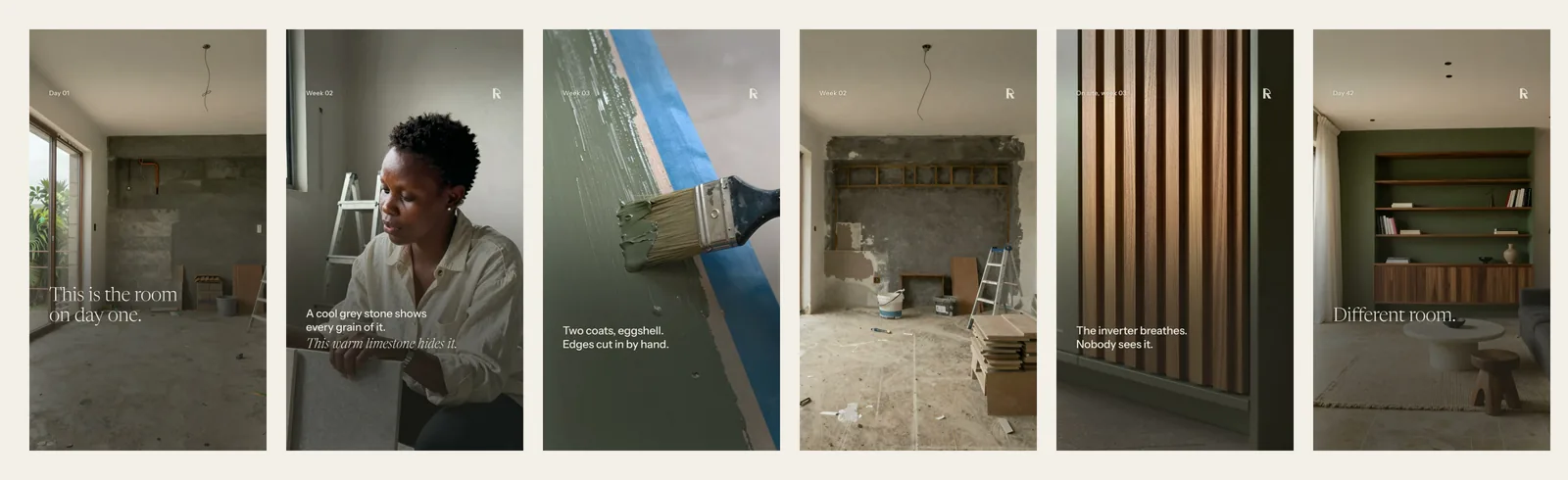
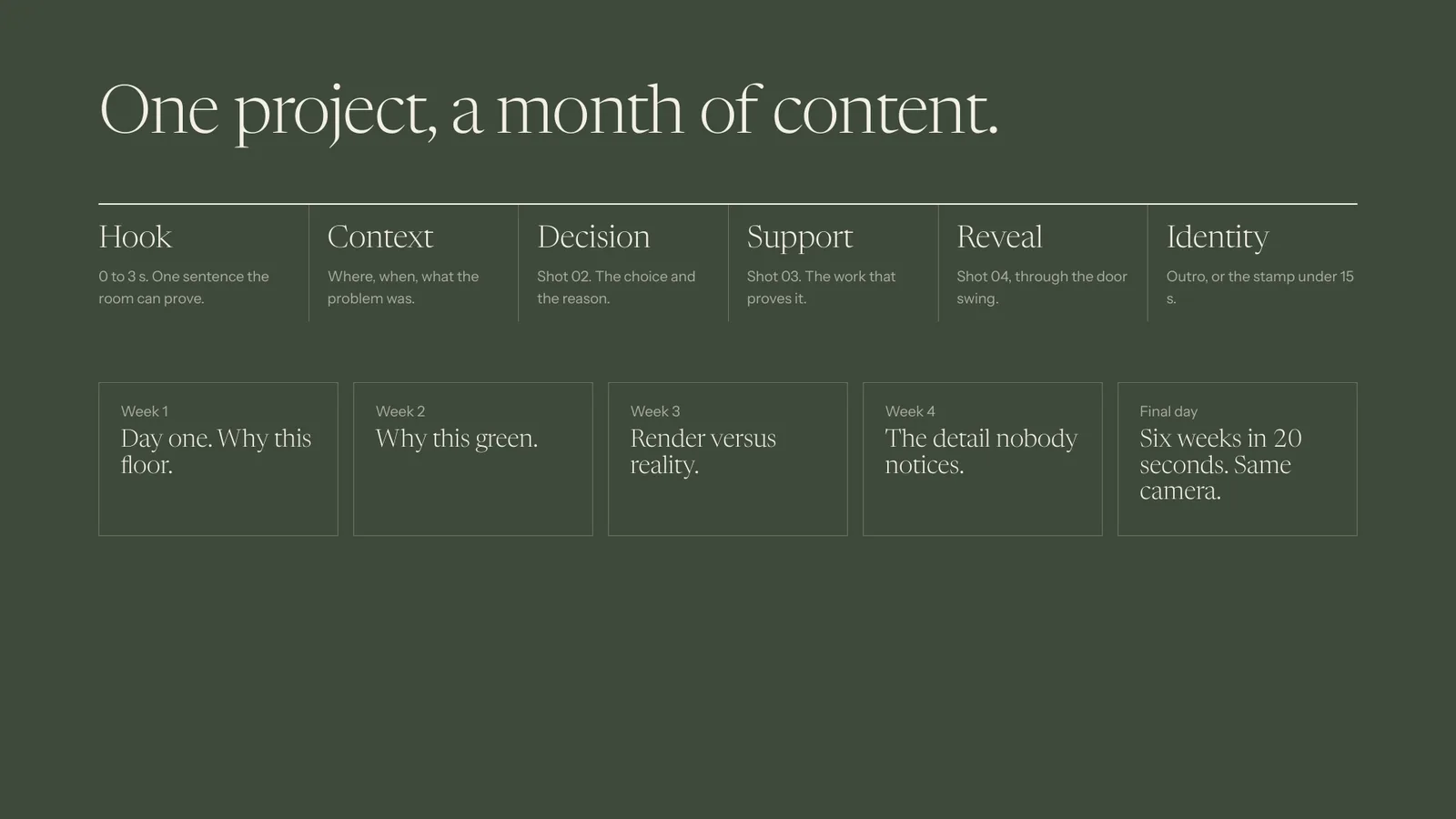
- A short-form edit system. Not a stack of finished videos: a repeatable cut with a defined structure, a caption style, a sound approach, and a place for the motion identity, applied to five to eight edits a month from whatever the studio shot on site. Every edit ships in vertical and horizontal.
The four shots that make the system work
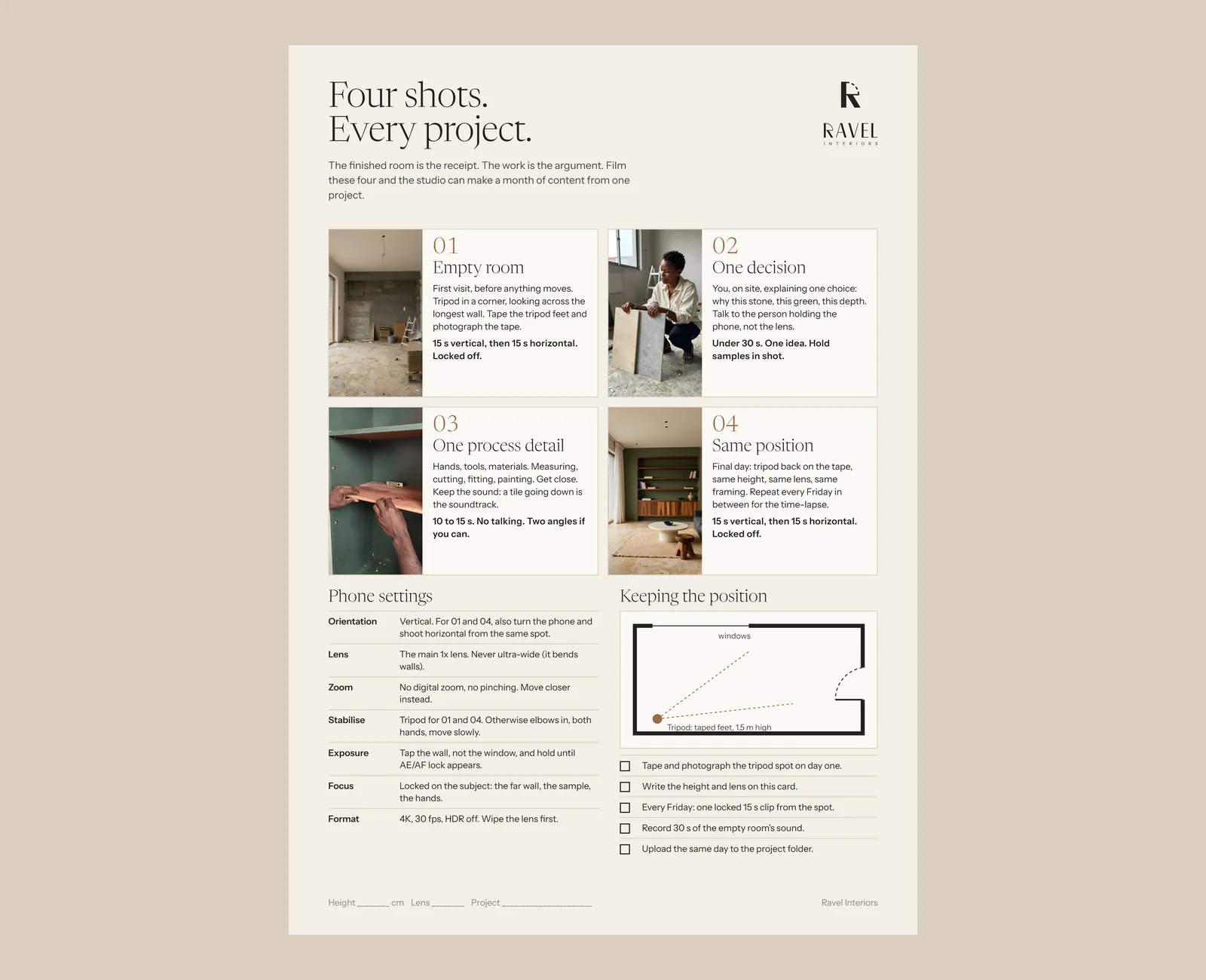
The edit system depends on the studio capturing four things per project, which takes minutes rather than a production crew:
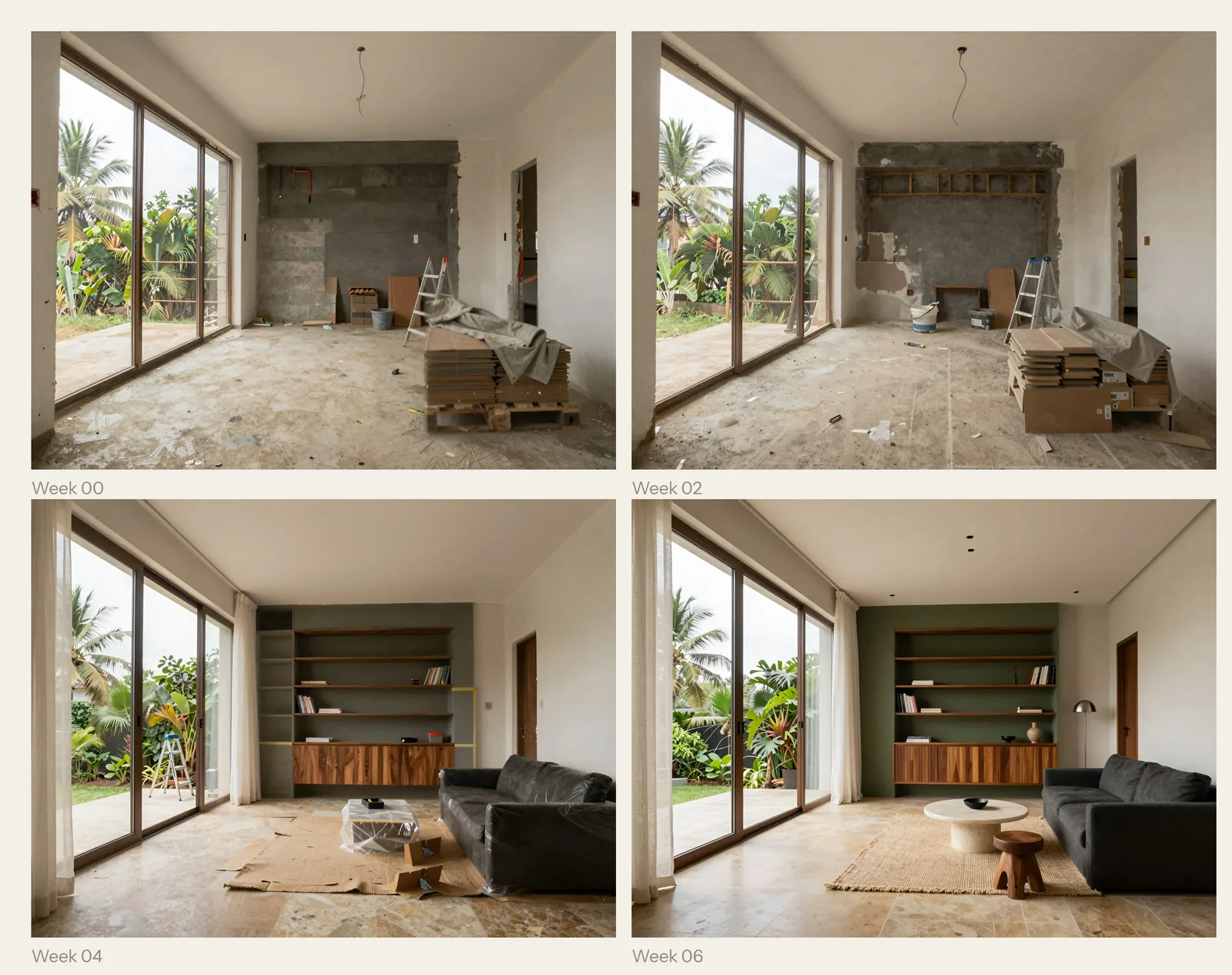
- The empty room, on day one, from one fixed position. Every later shot is taken from that same spot, so the reveal is a hard cut and not an argument.
- One decision, spoken aloud. Thirty seconds of the designer saying why the tile, on site, unpolished. This is the piece that sells judgement and it cannot be reconstructed afterwards.
- One process detail. Hands, material, a thing being fitted. Close, slow, no commentary.
- The same fixed position, on the last day. That is the reveal, and it is worth more than the shoot because the viewer has seen the room it used to be.
What ships
- A two-to-four second animated logo intro, a one-second stamp variant, and an outro card with CTA, in MP4 and transparent MOV
- A UI motion pack: hero and scroll entrances, button, hover, and form-state behaviour, and a before-and-after reveal component, as Framer Motion components and Lottie files
- Five to eight short-form edits a month, captioned, sound-designed, hooked, in vertical and horizontal exports
- An edit template and style guide: the cut structure, type treatment, caption rules, and where the motion identity sits, so the studio’s own editor produces the same thing when we are not in the room
- A one-page shooting card for site: the four shots, the fixed-position rule, and what to do with the phone, written for a designer on a live build rather than a videographer
- Source files for everything, so nothing is locked to us
Why this matters
The distinction worth holding onto is between buying an animation and building a production system. An animation is spent the moment it is delivered. A system changes what the studio captures on every project from then on, which means the raw material keeps arriving whether or not anyone is retained to cut it.
The same structure applies to anyone whose work happens over weeks and is currently only photographed at the end: architects, fabricators, restorers, bespoke furniture makers, landscapers, tailors. The finished piece is the receipt. The work is the argument, and it is usually thrown away.