This is a system concept. StoreOS is a working demo we built to show what we make for businesses that sell physical goods. The shop, the customers and the numbers in it are made up, and no client is running it. If you want one, we build yours around how you already work.
A shop takes an order in a group chat, checks the stock in a spreadsheet and matches the payment from memory. StoreOS keeps all three in one place. Below is one order going through it: Sam asks for three blue boxes for Friday, and that is the last thing anyone has to type.
One order, start to finish
 1
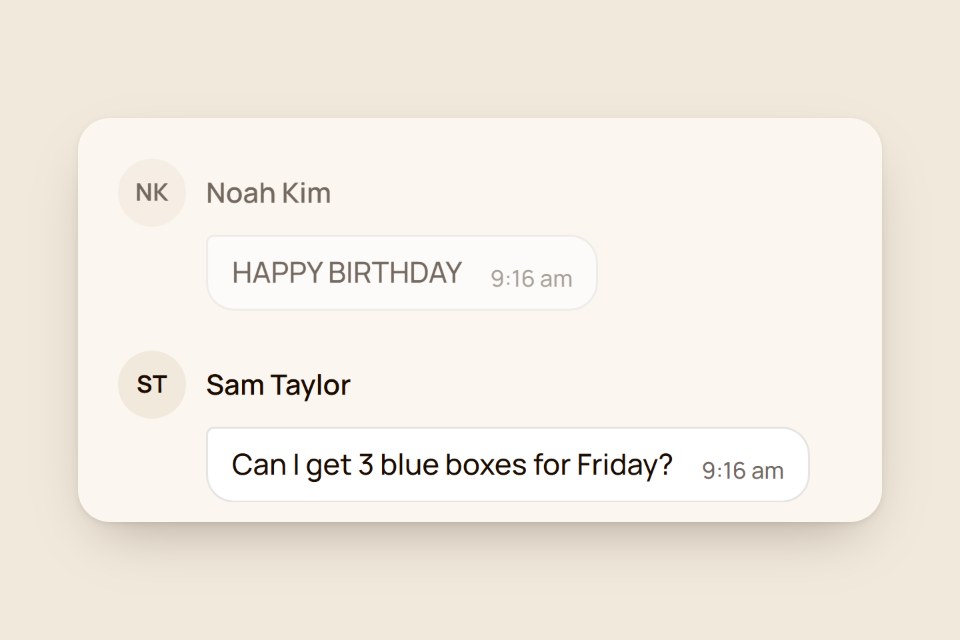
Sam asks in the group chat
The order sits under a birthday wish. It gets read anyway.
 2
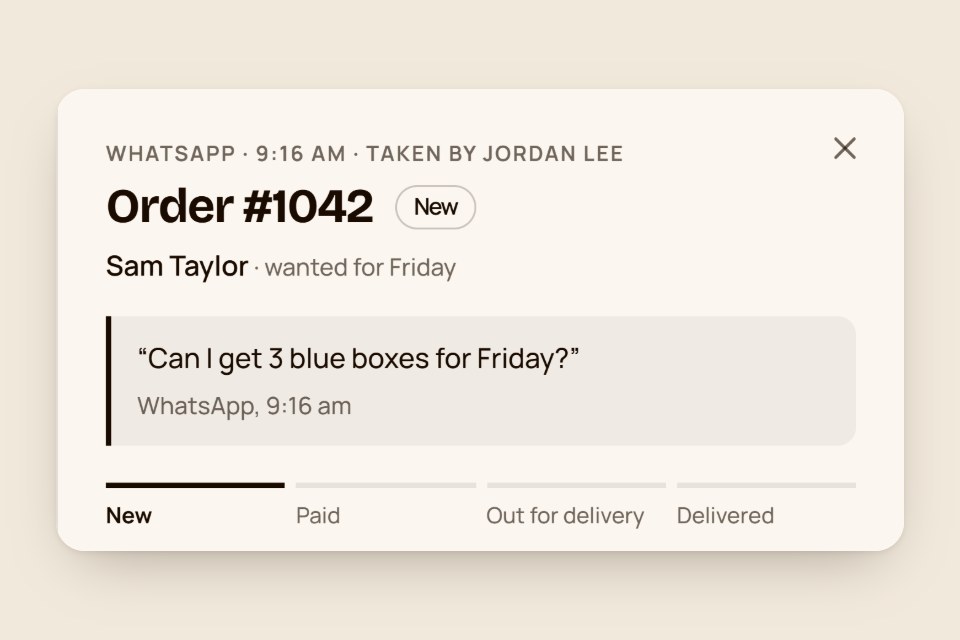
It is already an order
Customer, item, quantity and day. Nobody retypes anything.
 3
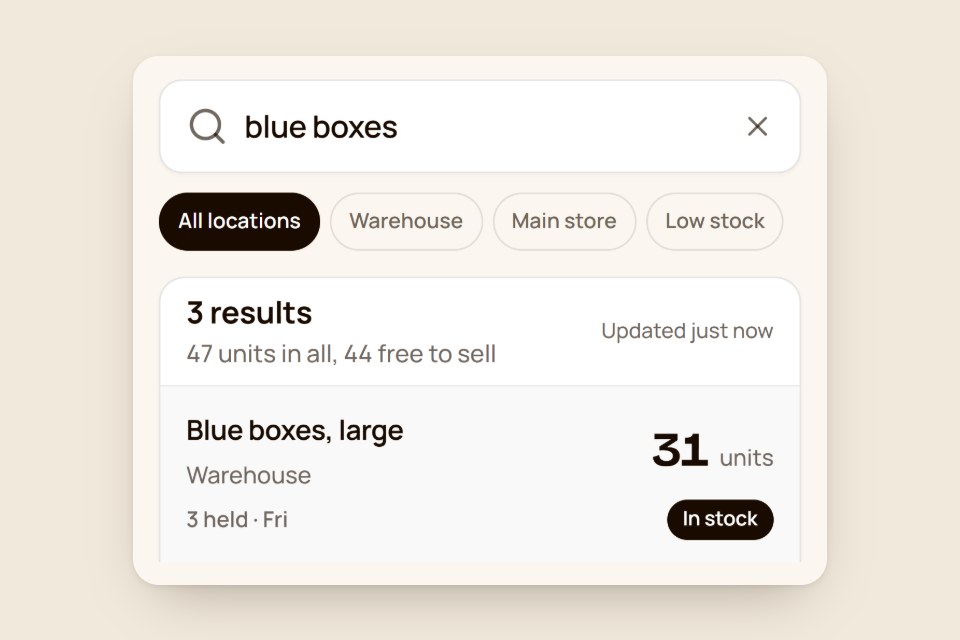
Three boxes are set aside
One search shows the shelf. The hold ends by itself on Friday.
 4
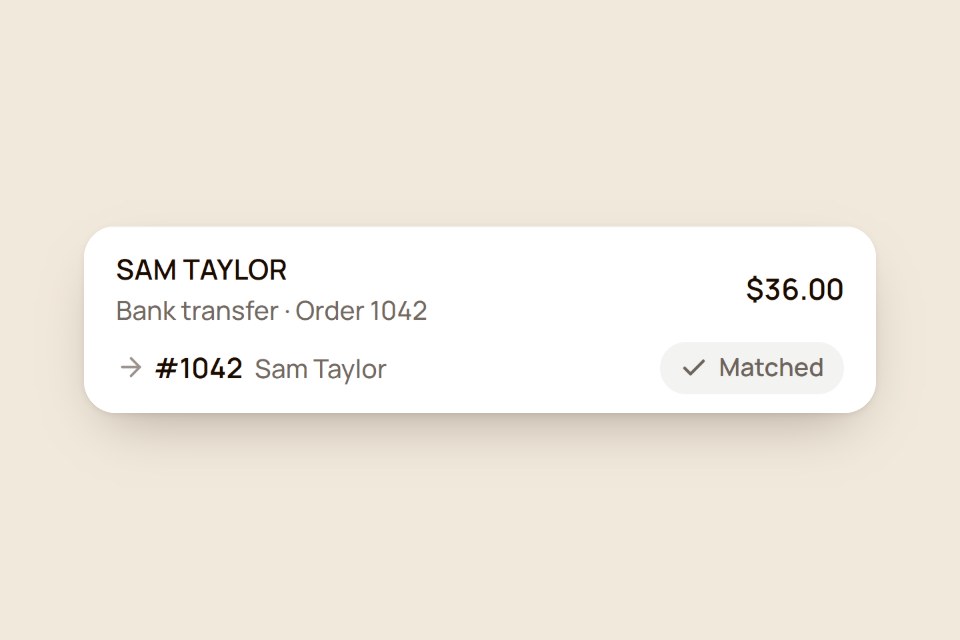
The payment finds its order
Sam pays by transfer, and it is matched before anyone looks.
The problem
A small shop, wholesaler or distributor rarely runs on software. It runs on a WhatsApp group, three copies of final_FINAL_v3.xlsx, a pile of receipts and a notebook only one person can read. That holds until the business grows. Then the same five things go wrong every day:
- Orders get buried in the group chat, between the birthday wishes.
- “Let me check and get back to you” takes two hours, and the customer buys elsewhere.
- A payment lands and nobody can say which order it belongs to.
- “Can you hold it for me?” takes stock off the shelf with no end date.
- Staff wait on the owner for every answer, so the business stops when the owner steps away.
What we built
One place for the whole day, shaped around the way the shop already takes orders.
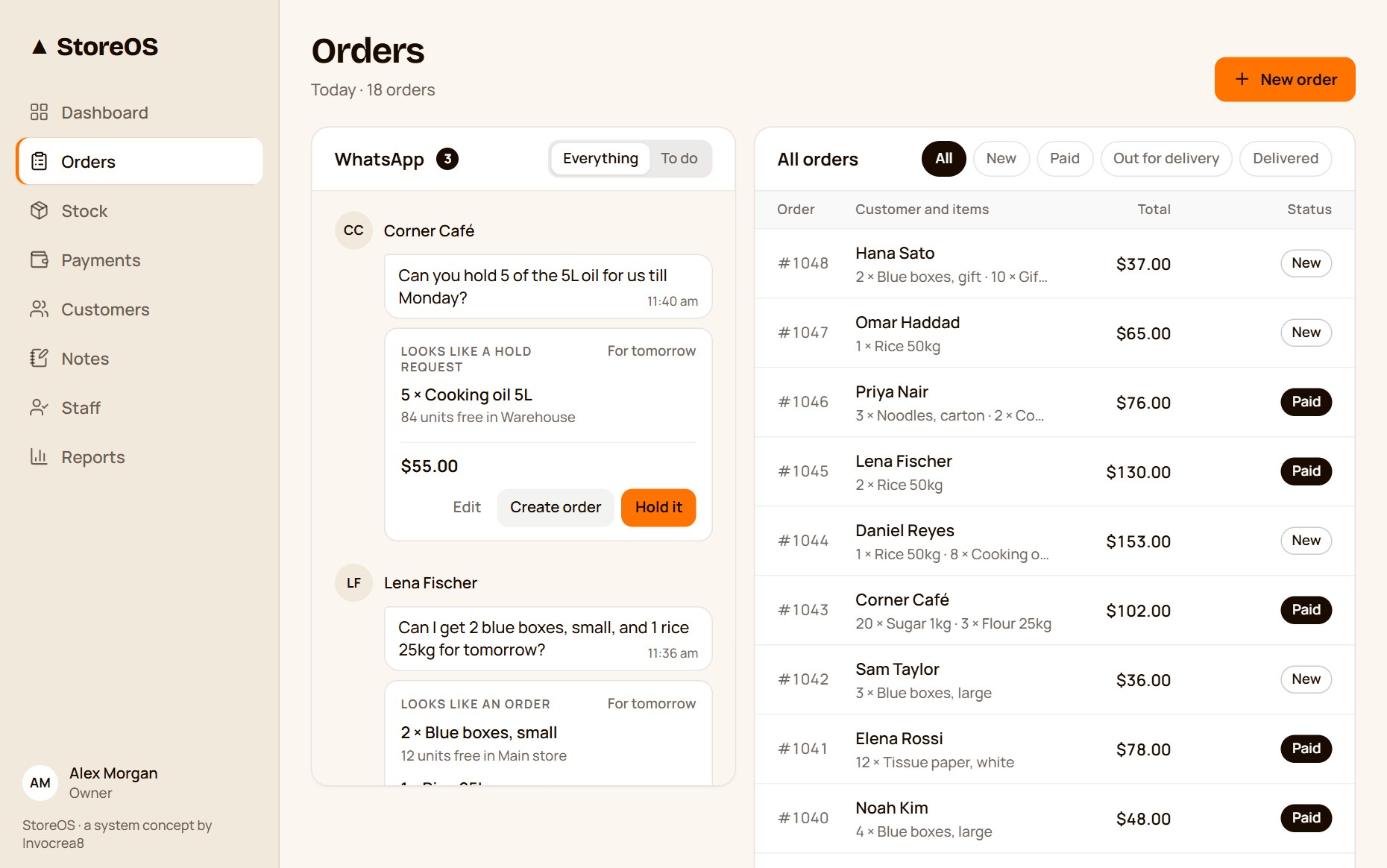
- Orders from WhatsApp. The inbox reads each message, picks out the item, the quantity and the date, and checks the shelf. One click turns it into an order. Nobody retypes anything.
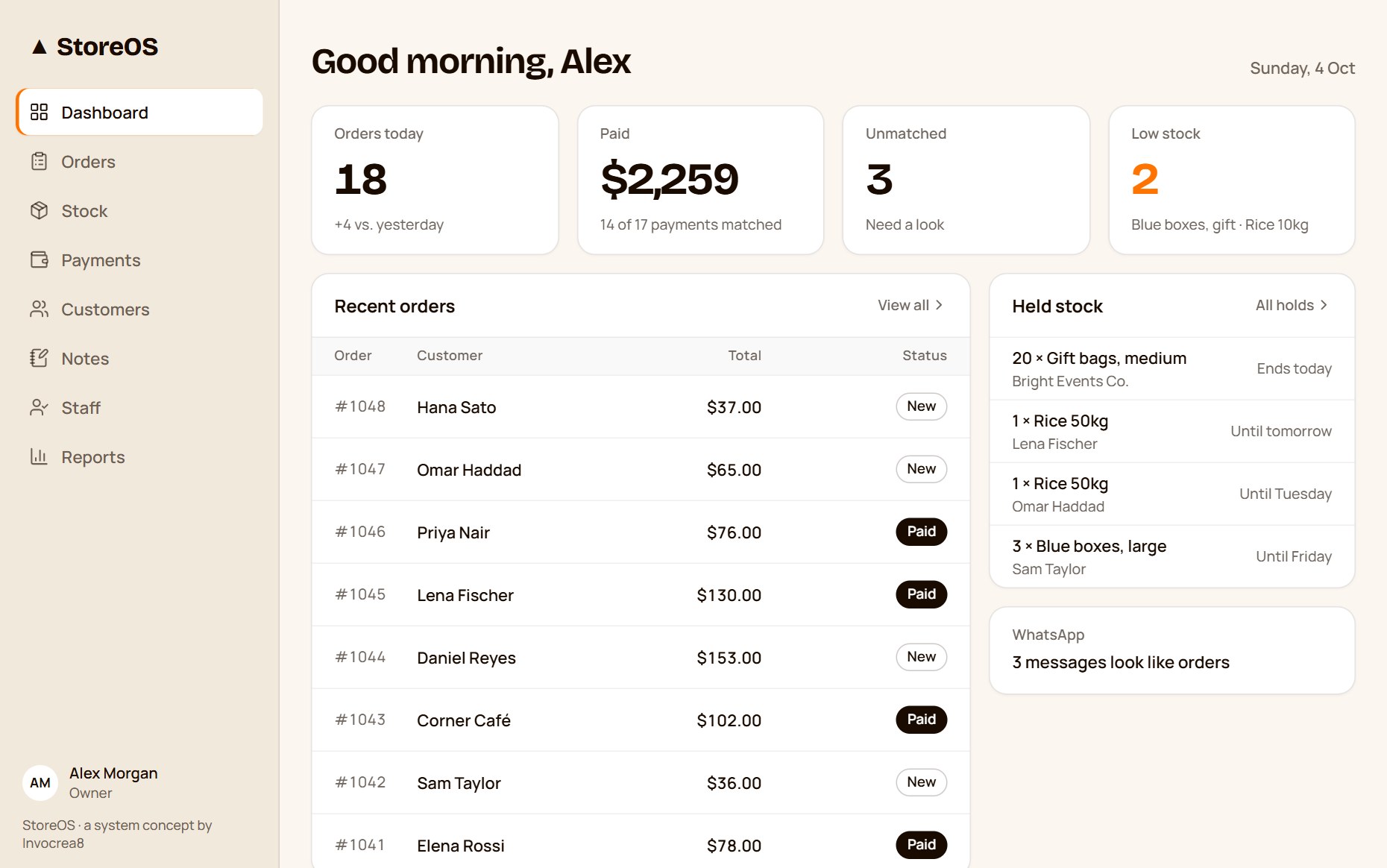
- Stock search. One search box across the warehouse and the main store shows units on the shelf, units held and what is running low. “Do you have it?” gets an answer in two seconds.
- Holds that end. Stock is kept aside for a named customer until a date. When the date passes, the hold ends by itself and the stock goes back on sale.
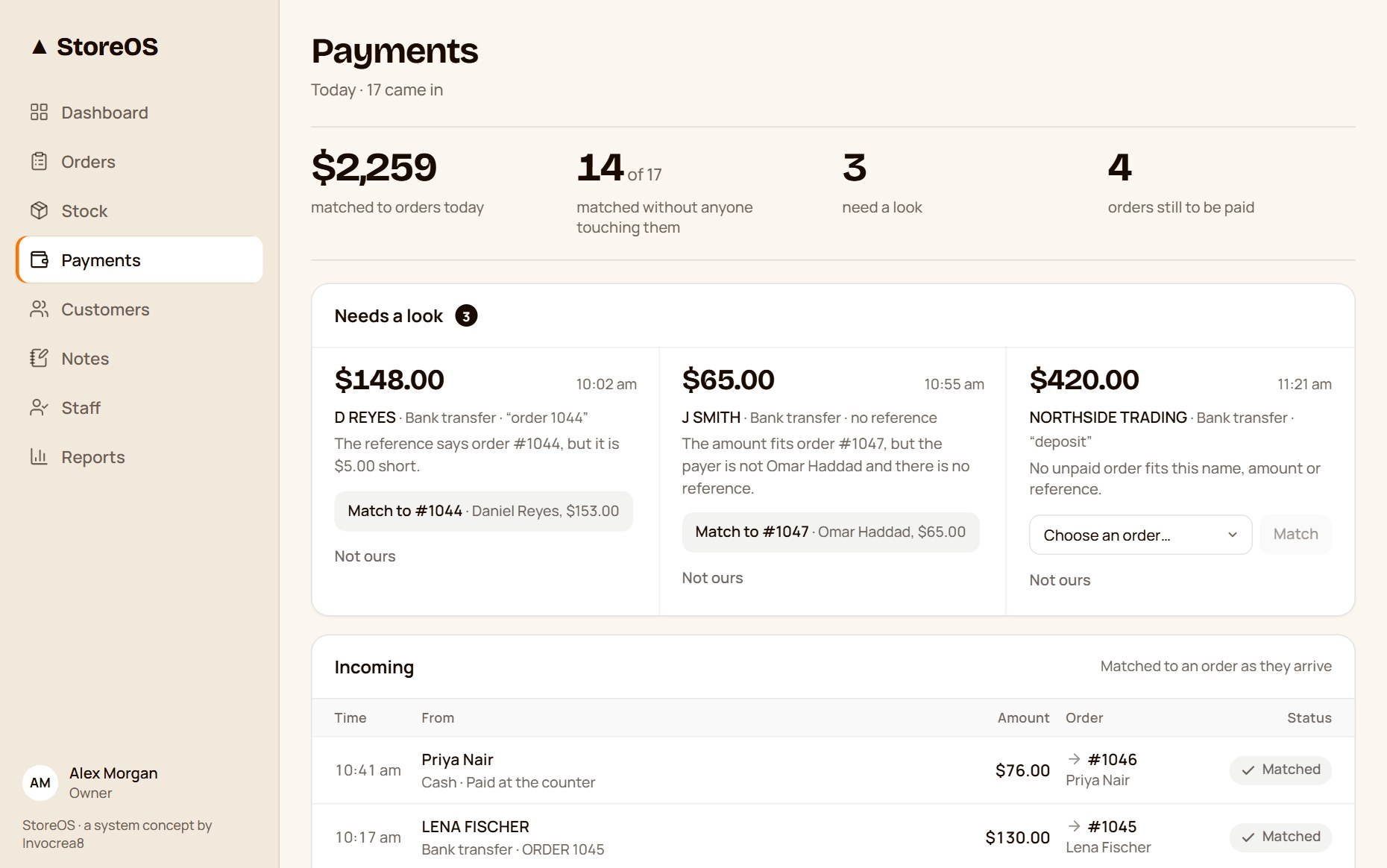
- Payments that match themselves. Each incoming payment is matched to its order by reference, name and amount. The few that do not fit wait in a short “needs a look” queue, each with the reason spelled out.
- Customers, notes and staff. Order history and what each customer usually buys. Team notes attached to the customer, order or item they are about. A plain record of who did what.
What it changes for the owner
- You answer a customer while they are still in the chat.
- You stop being the only person who knows what is in stock, who has paid and what was promised.
- Holds stop quietly eating your stock.
- The end of the day is a short queue of odd payments, not an evening of matching bank alerts to messages.
- Your staff can answer for themselves, so the shop keeps moving when you are away.
Try it
The demo opens in the browser. Take the 60-second tour and watch another order, Maya’s 20 bags of rice, go the same way: message, order, stock check, hold, payment matched. Then click around. Nothing you do leaves your browser, and “Reset demo” puts everything back.
How it is made
- React and TypeScript, built with Vite into a static site
- Seeded data, saved in the browser, with no backend
- No real payments or messaging are connected in the demo
- Bricolage Grotesque and Manrope
Want this for your business?
StoreOS is a starting point. Tell us how orders, stock and payments move through your business today and we will show you what we would build around it and what it costs. Fixed price agreed upfront.